Why Being a One Person Company Is Actually a Superpower
Being small feels like a weakness until you realize it's the thing your customers actually value.
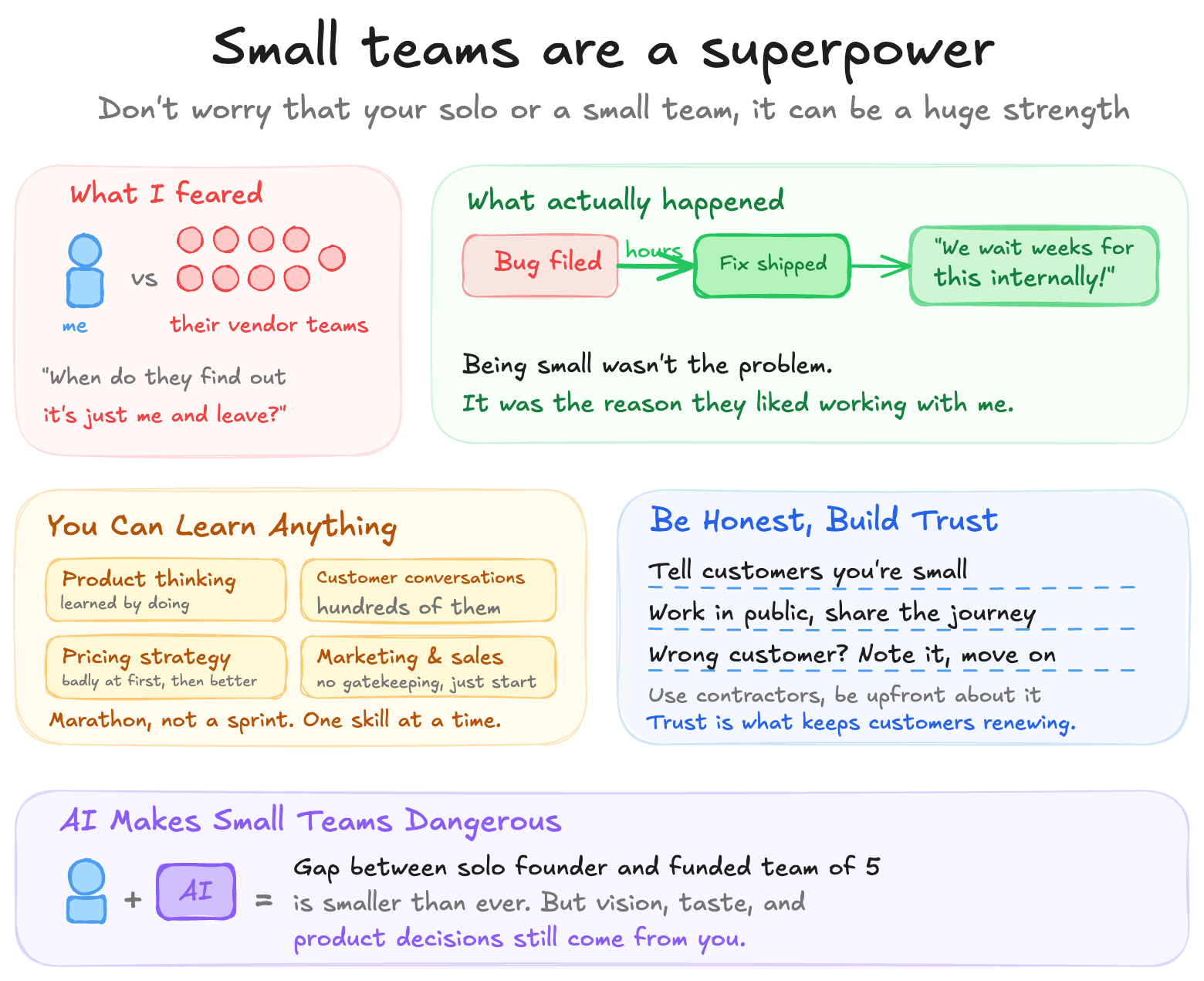
When I first started selling EventCatalog, I had this nagging anxiety. I’m one person. My customers are enterprise teams inside big organisations. They’re used to vendors with account managers, support teams, and SLAs backed by dozens of engineers. I kept thinking, “At what point do they find out it’s just me and walk away?”
I had skill gaps everywhere. I’m not a product manager. I’m not a marketer. I’m not a salesperson. I’ve been building software for 20 years, but selling it? That was a different world. I genuinely wondered if I could pull it off without a team behind me.
Then something interesting happened. A customer raised a bug and I shipped the fix in a few hours. They couldn’t believe it. They were used to waiting weeks for patches inside their own organisations. That moment flipped something in my head. Being small wasn’t the problem I thought it was. It was the reason they liked working with me. Here’s what I’ve learned about leaning into it.
Speed Is Your Superpower
- Turn bugs around in hours, not weeks. When a customer reports an issue and you ship the fix the same day, that builds more trust than any SLA document ever will.
- Ship decisions, not meetings. You don’t need consensus from three teams to change a button or adjust pricing. You just do it. This compounds over time in ways that are hard to overstate.
- Think about what your enterprise customers are used to. They live in a world of Jira tickets, sprint planning, and quarterly roadmaps. Your ability to respond in real time feels almost magical to them.
- Handle contracts and admin quickly. Things like due diligence, security questionnaires, and contract reviews that typically take companies weeks… you can turn around in days. That speed alone can win deals.
- Don’t underestimate how much people appreciate responsiveness. It’s not just about fixing things fast. It’s about making customers feel heard. That’s something big teams struggle with.
You Can Learn Anything (Seriously)
- Most skills can be learned if you’re willing to just start. I learned product thinking, customer conversations, pricing strategy, and marketing by doing them badly at first and getting better. There’s no shortcut, but there’s also no gatekeeping.
- Lead with the problem, not the product. This was one of the biggest mindset shifts for me. I stopped talking about features and started talking about the pain my customers were feeling. That skill came from having hundreds of conversations, not from reading a book.
- Treat it like a marathon, not a sprint. You don’t need to be great at everything on day one. Pick up one skill at a time. Get comfortable with being uncomfortable for a while.
- There’s more learning material out there than you’ll ever need. Videos, communities, other founders sharing their playbooks… the resources exist. The hard part is actually doing the work, not finding the information.
- Think about which skills compound the most for your specific business. For me, it was understanding my customers’ problems deeply. For you it might be content, or sales, or community building. Figure out what moves the needle and go there first.
Be Honest, Build Trust
- Tell customers you’re a small company. Don’t pretend you have 10 engineers behind you. People can sense when something isn’t authentic, and the trust you lose from being caught isn’t worth it.
- Being open about your size is part of the story people respect. Working in public, sharing the journey, being transparent about where you are… this attracts customers and supporters who want to be part of something real.
- If a deal falls through because of your size, make a note and move on. Not every customer is the right customer right now. Some will come back later when you’ve grown. Don’t bend yourself into something you’re not to close a single deal.
- Use contractors when you need to, and be upfront about it. I bring in help for specific things and I tell my customers. It shows them I take quality seriously and I’m not trying to do everything alone out of stubbornness.
- Think about trust as the thing you’re actually building. The product matters, but trust is what keeps customers renewing. Being honest from day one compounds into something really valuable over time.
AI Makes Small Teams Dangerous
- AI lets you do the work of a small team without hiring one. Fixing bugs, reviewing pull requests, researching markets, understanding customer problems… a couple of smart prompts can replace hours of work that used to require multiple people.
- Don’t give up the critical thinking. AI is a tool, not a replacement for your judgment. You’re the orchestrator. Use AI to accelerate, but the vision, taste, and product decisions still need to come from you.
- The quality bar hasn’t changed, but the speed to reach it has. You can ship better work faster now. That means the gap between a solo founder and a funded team of five is smaller than it’s ever been.
- Think about what this means for your product’s narrative. Your vision, your passion, your taste… these are things AI can’t replicate. The moat around your product might narrow on the technical side, but it widens on the human side. Lean into that.
- You’ll probably need people eventually, and that’s fine. The point isn’t to stay solo forever. It’s that you can get much further than you think before you need to hire. And when you do hire, you’ll know exactly what you need because you’ve done every job yourself.
Related Visuals
Why I Chose to Bootstrap EventCatalog and What It Taught Me About Defining Success on Your Own Terms
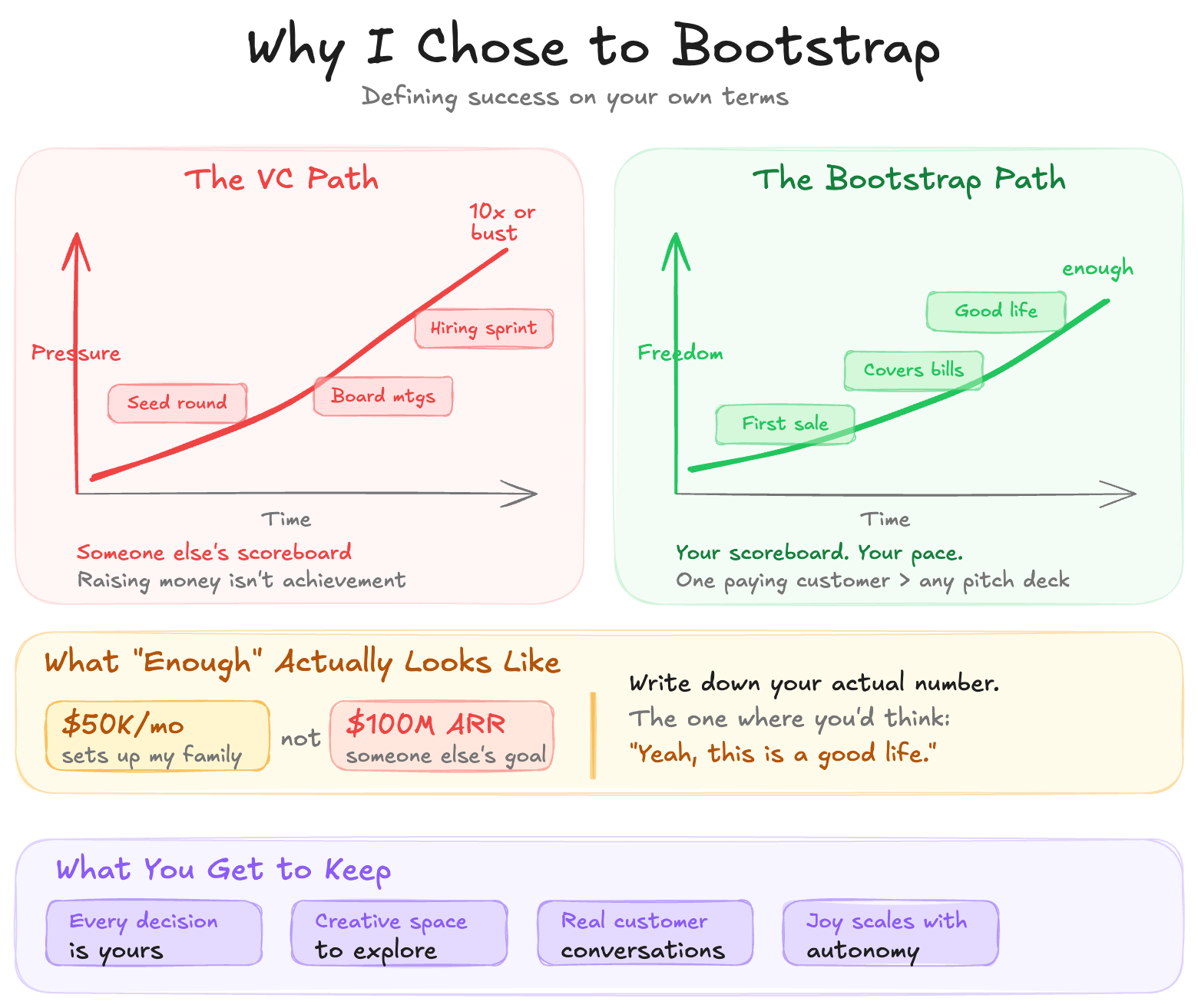
What changes when you stop chasing VC milestones and start building for the life you actually want.
Why I Quit My Job to Build EventCatalog and What I Learned About Taking the Leap
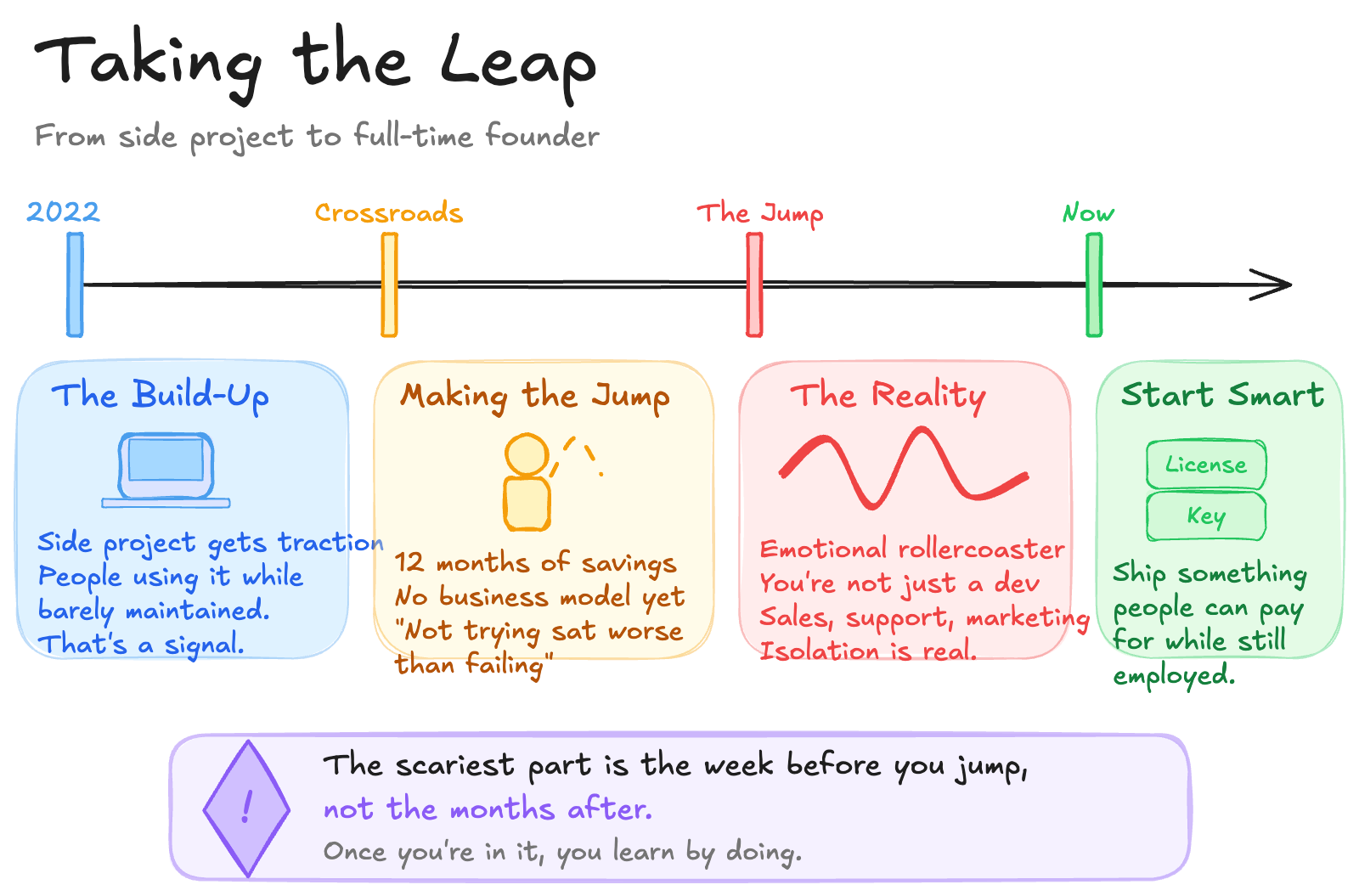
What it really looks like to leave your job and go all-in on an open source project.
I Got to $23K MRR Without Stripe and What That Taught Me About Starting Simple
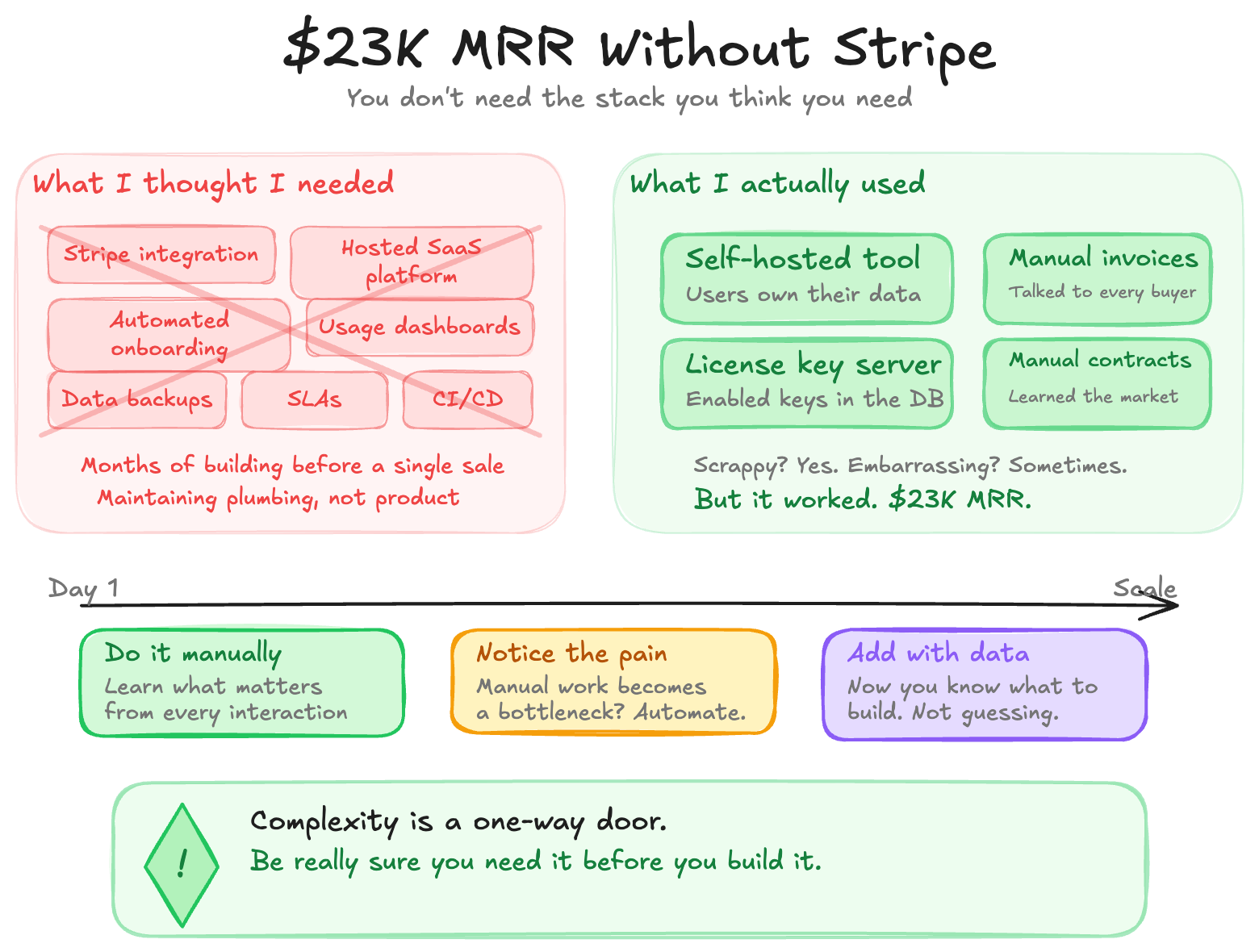
You don't need half the infrastructure you think you need. Here's what actually matters when you're building something from zero.
New visual every week
Short visual breakdowns on pricing, growth, and the realities of bootstrapping. Delivered to your inbox. No fluff.