Why I Spent All My Time Chasing New Customers and What I Learned When Renewals Hit
What happens when you focus all your energy on acquisition and forget the people already paying you.
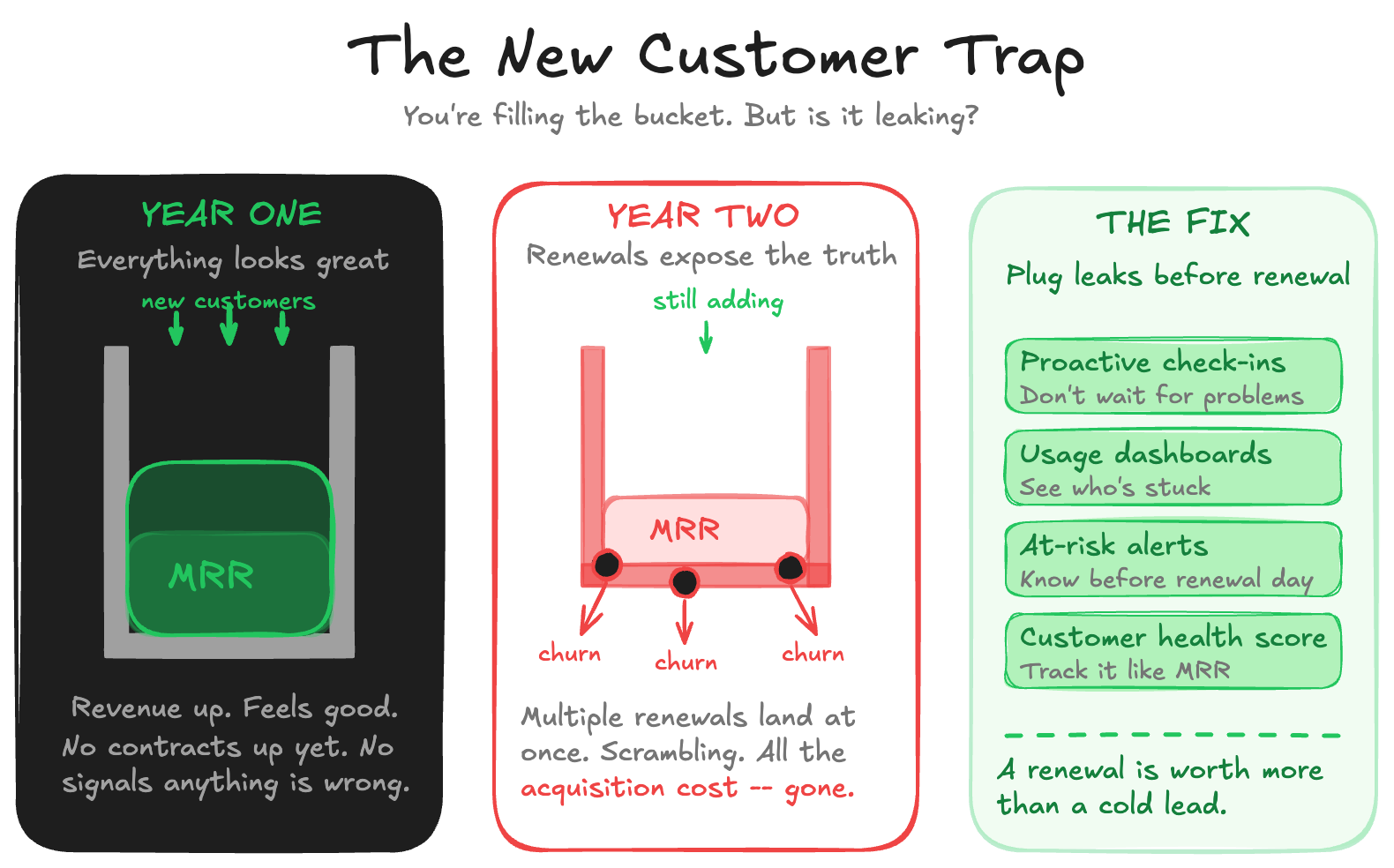
The new customer trap
I’ll be honest, getting a new paying customer is one of the best feelings in bootstrapping. Someone sees what you’ve built, pulls out their card, and says “yes, this is worth paying for.” That dopamine hit is real. And when you’re early on, you need that revenue. You need the runway. So you chase the next one. And the next one. It makes total sense.
The problem is, I did this for a long time. Every week was about who’s in the funnel, who’s close to signing, how do I get the next logo. And it worked… for a while. Revenue was going up. Things felt good.
Then year two arrived. Renewals started coming up. And suddenly I realized I had spent almost no time making sure the people already paying me were actually getting value from EventCatalog. I’d been so focused on filling the bucket that I forgot to check if it was leaking.
The Dopamine Hit of New Customers
- Recognize that acquisition is addictive. Every new customer feels like validation. That’s great, but it can pull all your attention away from the people who already believe in you.
- Think about where your time actually goes each week. If you’re spending most of it on prospects and almost none on existing customers, that’s a pattern worth noticing early.
- New customer revenue is exciting, but renewal revenue is what keeps you alive. One builds momentum. The other builds a business.
- Something to consider… the skills that win new customers (marketing, demos, sales) are completely different from the skills that keep them (support, onboarding, making sure they get ROI). You have to invest in both.
What Happens When Year Two Arrives
- Renewals will expose every shortcut you took. If customers aren’t getting real value from your product, you’ll find out when it’s time to renew. Not before.
- The painful thing is retention problems are invisible early on. Everything looks fine because nobody’s contract is up yet. Then suddenly, multiple renewals land at once and you’re scrambling.
- Ask yourself right now: do your current customers know how to get the most out of your product? If you’re not sure, that’s your answer.
- Think about this… a customer who churns after year one isn’t just lost revenue. It’s all the time you spent acquiring them, onboarding them, and supporting them. Gone.
What I’m Doing Differently Now
- I started reaching out to customers proactively. Not waiting for them to come to me with problems. Regular check-ins, even quick ones, go a long way.
- I built usage tracking and custom dashboards so I can actually see if customers are using EventCatalog, how often, and where they might be stuck. You can’t improve what you can’t see.
- I set up automation to flag at-risk accounts. If usage drops, I want to know before the renewal conversation, not during it. Early signals give you time to act.
- Something worth exploring… make “customer health” as visible as your MRR dashboard. If you track new revenue obsessively but don’t track engagement, you’re flying blind on retention.
How to Avoid This Trap From Day One
- Your first 5-10 customers are your most important asset. Resist the urge to immediately chase number 11. Make sure 1 through 10 are thriving first.
- Get on calls with your existing customers regularly. Ask for feedback. Move fast on it. The power of being a solo founder or small team is that you can ship what they need this week, not next quarter. That surprises people in a good way.
- Think about building retention into your workflow from the start. Don’t wait until renewals force you to figure it out. A simple monthly check-in habit costs you nothing and catches problems early.
- Growth isn’t just new logos. A customer who renews, expands, or refers someone is worth more than a cold lead. Some of the best “acquisition” you can do is making sure your existing customers love what you’ve built.
Related Visuals
My First Sale and What I Learned About Turning Free Users Into Paying Customers
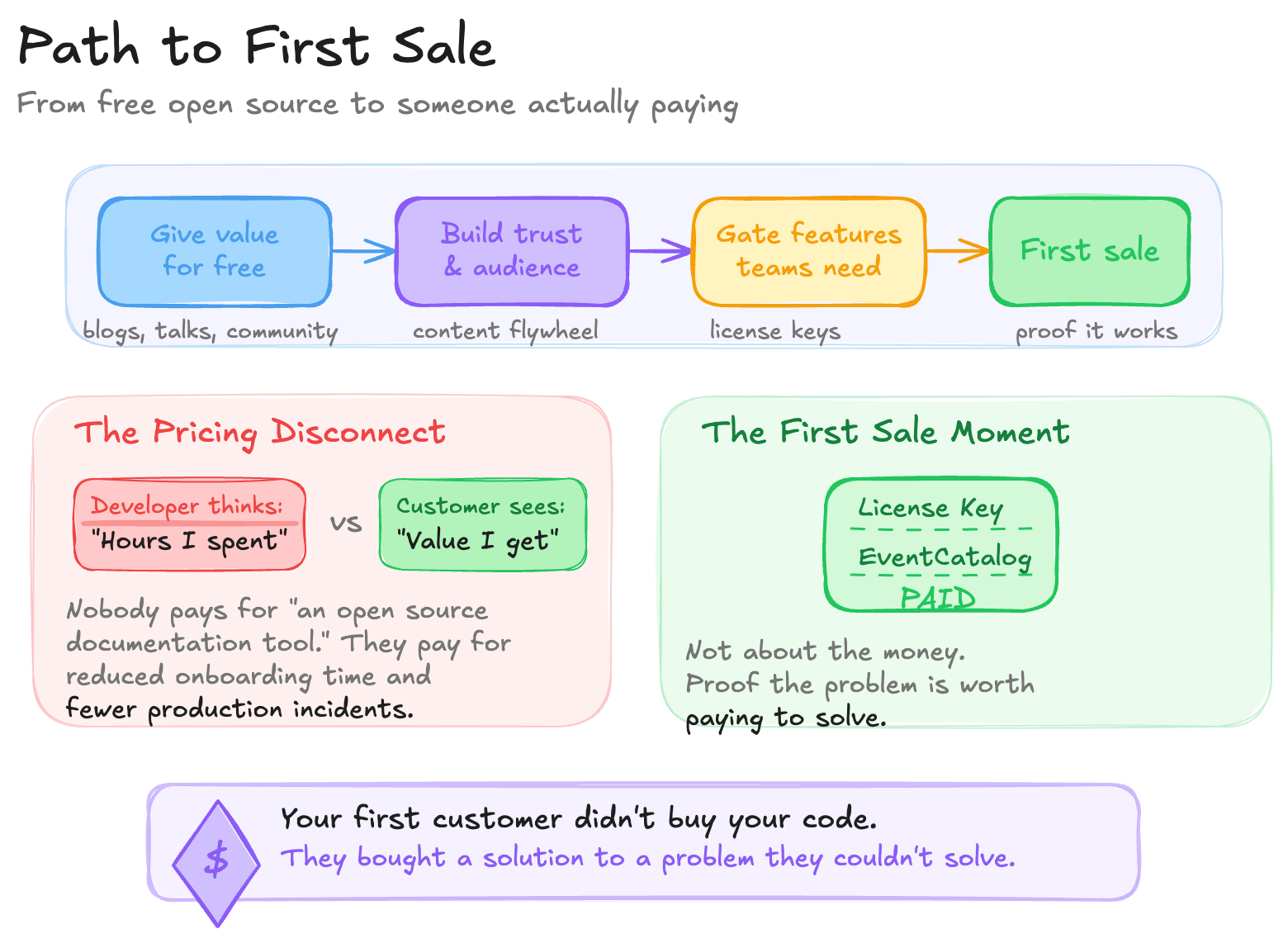
How I went from free open source project to someone actually paying me for it.
How I Turned Content Into a Growth Engine and Why It Works Better Than Ads
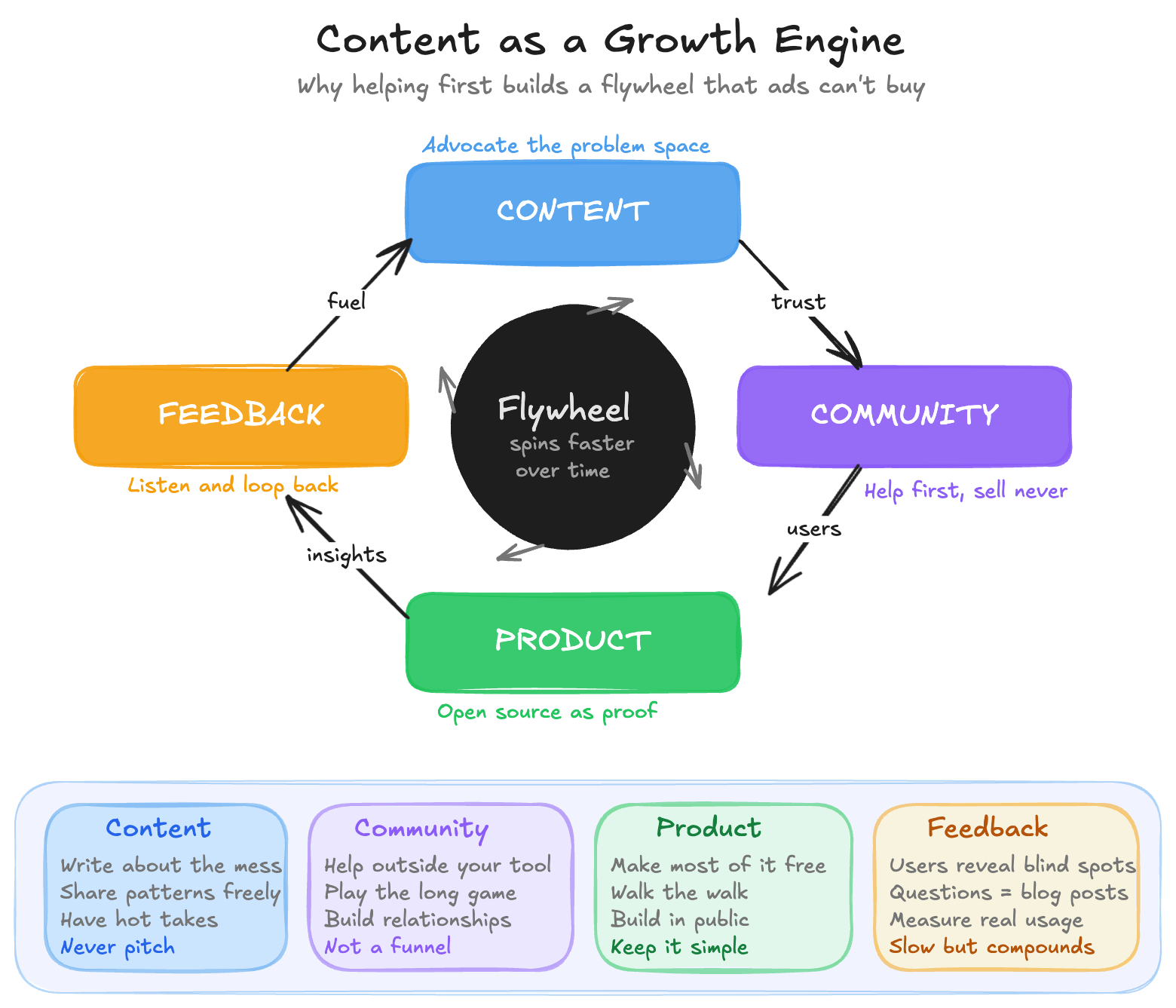
Why developer advocacy and problem-space thinking created a compounding growth flywheel for me
New visual every week
Short visual breakdowns on pricing, growth, and the realities of bootstrapping. Delivered to your inbox. No fluff.