Why I Undercharged for EventCatalog and What I Learned About How Developers Get Pricing Wrong
Why developers are wired to undersell their products and how to start pricing based on the problem you solve, not the code you wrote.
Developers and pricing
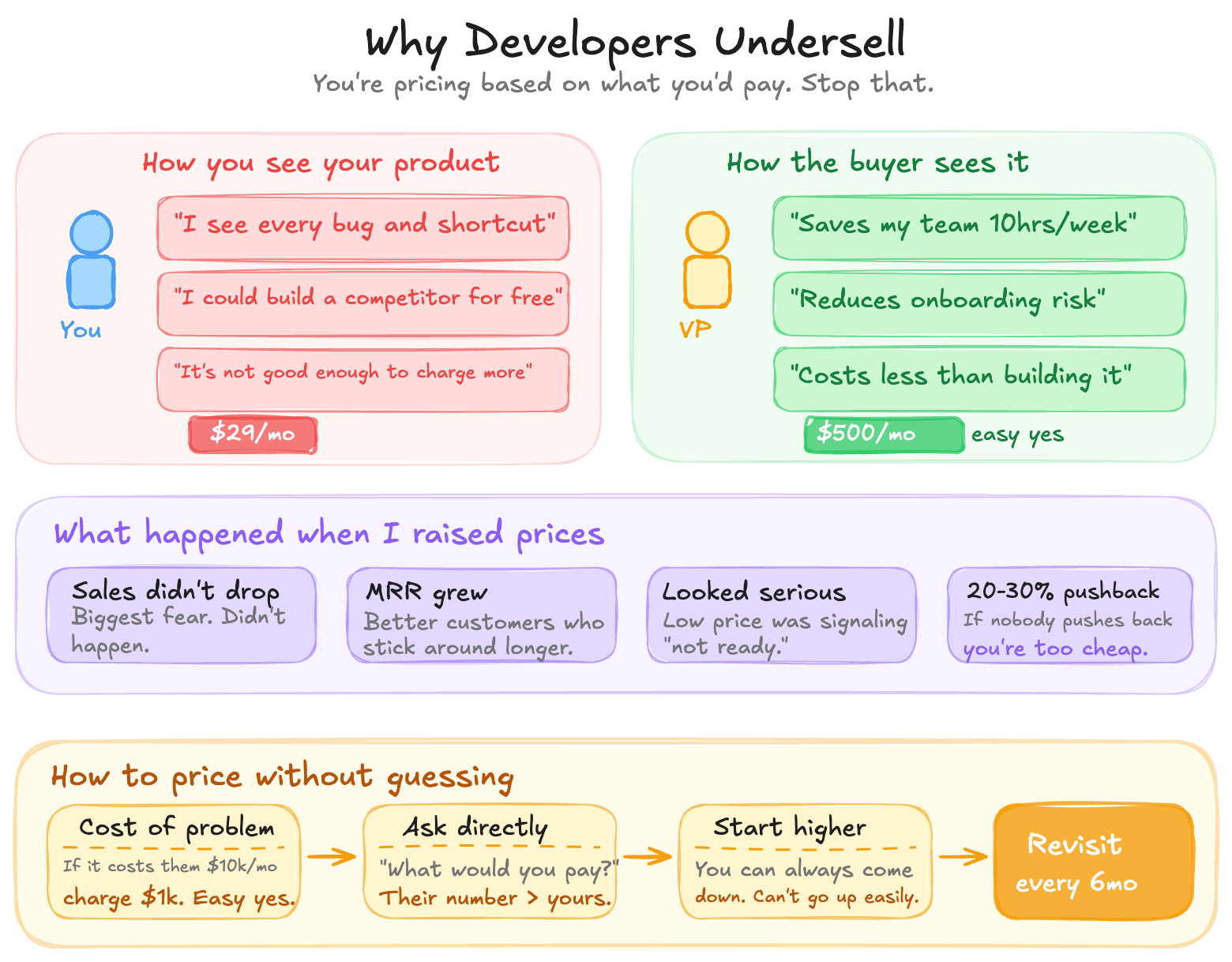
Someone told me something that stuck with me. “Developers are terrible at pricing.” At first I pushed back on it. I’d spent years thinking about what things cost, comparing tools, hunting for deals. But that’s exactly the problem. We’re price sensitive. We compare everything to free. We know we could probably build it ourselves. And when it comes time to price our own products, all of that baggage comes with us.
Here’s the thing I didn’t fully understand until I raised my prices on EventCatalog. Developers are rarely the ones buying software in a company. The budget holder is a VP, a team lead, a director. They’re solving a business problem and they have a budget for it. Software sells for thousands in enterprises. But as developers, we’re disconnected from that entire flow. So we price based on what we’d pay, not what the product is worth.
I raised my prices, and nothing bad happened. MRR grew. Nobody left. If anything, the product started looking more serious. That was a wake-up call. Here’s what I’ve learned about this trap and how to think about it differently.
Why Developers Are Terrible at Pricing
- We price based on what we’d personally pay. That’s the wrong reference point. You’re not your customer. The person buying your product is solving a business problem with a real budget, not a developer comparing it to a free GitHub repo.
- We anchor against open source and free tools. If you’ve spent your career using free software, it’s hard to charge $500/month for yours. But your buyer isn’t comparing you to a free tool. They’re comparing you to the cost of building it themselves or the cost of not solving the problem.
- Imposter syndrome sneaks into pricing. We see every bug, every shortcut, every feature we haven’t built yet. So we think “it’s not good enough to charge that much.” Meanwhile, the customer sees a product that solves their problem and is happy to pay.
- Think about this… if your product feels too cheap, it might actually look cheap. There’s real psychology behind pricing. A low price can signal “this isn’t serious” to a buyer with a real budget.
You’re Not Your Customer
- Figure out who is actually paying. In most companies, the person using your tool and the person approving the purchase are different people. The buyer cares about the business outcome, not the tech stack.
- Ask your customers directly what they’d be willing to pay. This sounds scary but it’s one of the most valuable conversations you can have. Most of us guess at pricing instead of just asking. You might be surprised how much higher their number is than yours.
- Find out what the problem is costing them today. If your product saves a team 10 hours a week, that’s thousands per month in developer time. Your $200/month price looks like a bargain against that… not an expense.
- Something to consider… when you downplay your product on calls or apologize for missing features, you’re training the buyer to think it’s worth less. Talk about the problem you solve, not the code you wrote.
What Happened When I Raised My Prices
- Sales didn’t drop. This was my biggest fear and it just didn’t happen. The people who see value in your product will pay what it’s worth. The ones who won’t were probably going to churn anyway.
- MRR actually grew. Fewer tire-kickers, more serious buyers. Higher prices can attract better customers who stick around longer and get more value from the product.
- I read that you want about 20-30% of prospects pushing back on price. If nobody is pushing back, you’re probably too cheap. That pushback is actually a healthy signal that you’re in the right range.
- Stop giving too much away for free. It’s tempting to be generous with free tiers and discounts because charging feels uncomfortable. But every discount trains your market to expect lower prices. Be thoughtful about what’s free and what’s paid.
How to Price Without Guessing
- Start by understanding the cost of the problem. How much is this costing your customer in time, money, or risk right now? Price your product as a fraction of that cost. If you save them $10,000/month, charging $1,000 is an easy yes for them.
- Have honest pricing conversations early. Ask prospects “what would you expect to pay for this?” and “what’s this problem costing you today?” These two questions will teach you more about pricing than any blog post.
- Start higher than feels comfortable, then watch the signals. You can always come down, but raising prices on existing customers is much harder. Give yourself room to learn.
- Think about revisiting your pricing every 6 months. Your product gets better over time. Your understanding of the market deepens. Your prices should reflect that growth… not stay frozen at whatever you guessed on day one.
Related Visuals
My First Sale and What I Learned About Turning Free Users Into Paying Customers
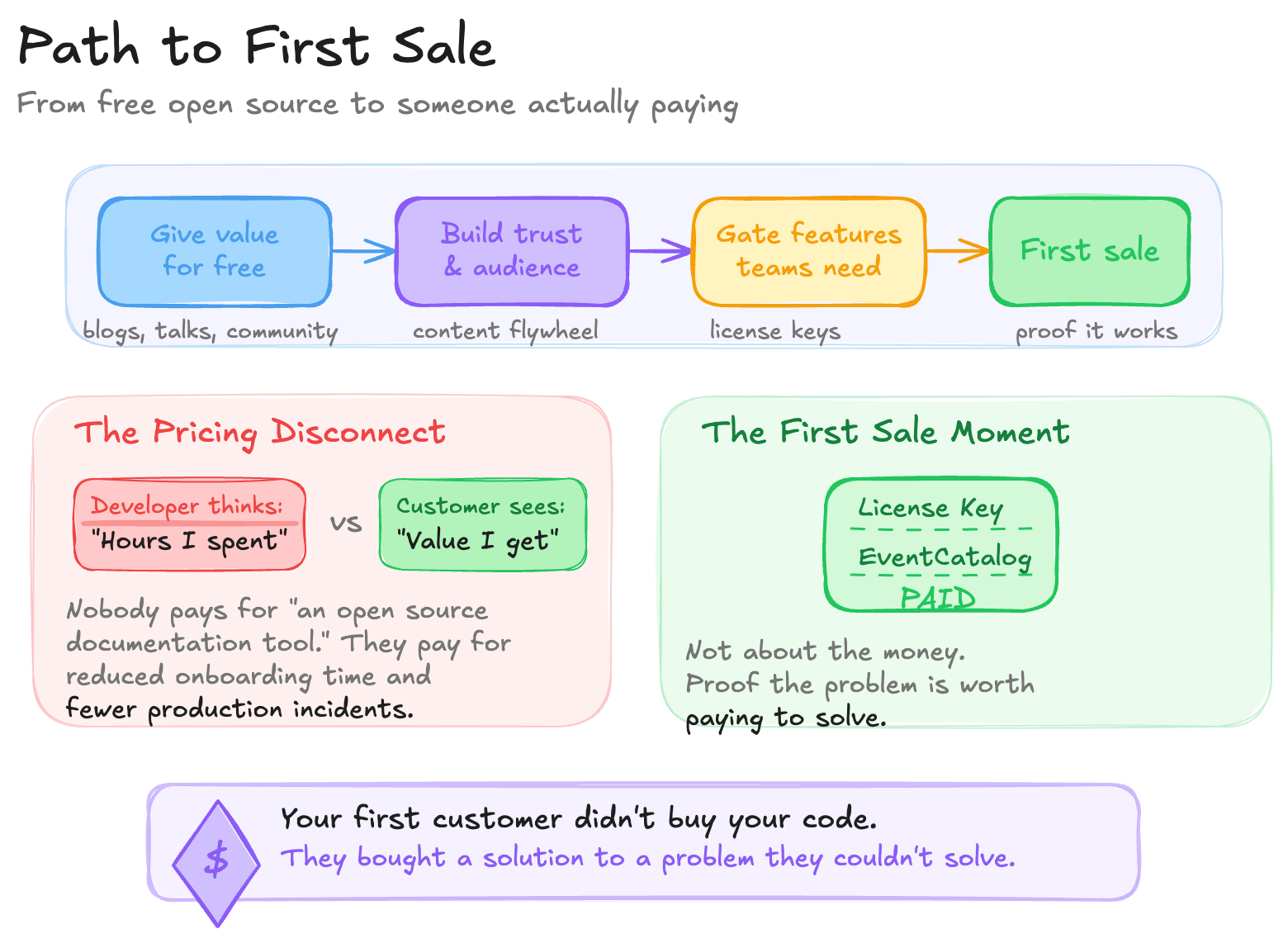
How I went from free open source project to someone actually paying me for it.
Why I Spent All My Time Chasing New Customers and What I Learned When Renewals Hit
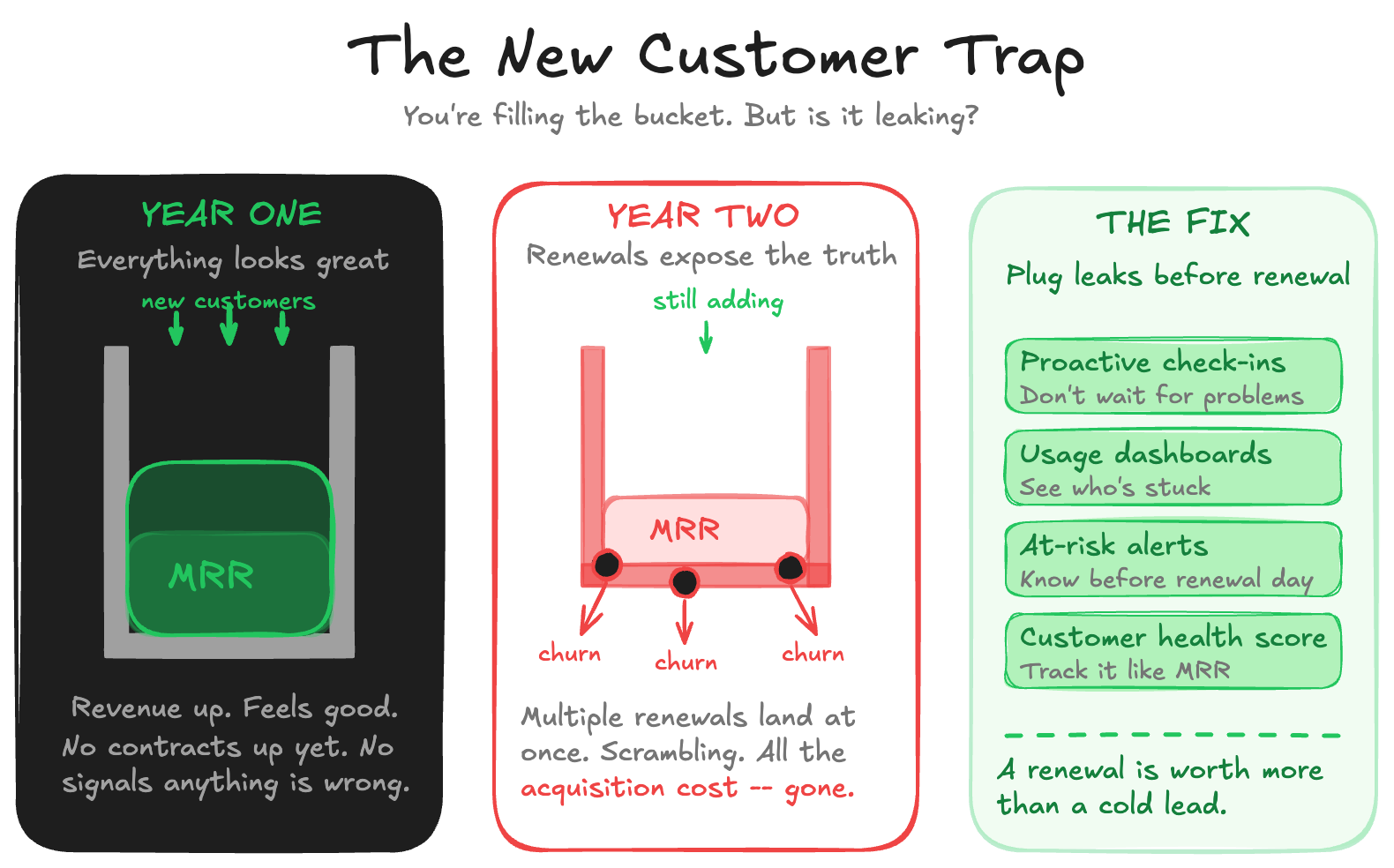
What happens when you focus all your energy on acquisition and forget the people already paying you.
New visual every week
Short visual breakdowns on pricing, growth, and the realities of bootstrapping. Delivered to your inbox. No fluff.