The Three Layers of Internal Budgets I've Learned When Selling Software
Three budget tiers, three very different sales motions. Here's how I think about pricing as a bootstrapper, and why chasing the top tier might not be worth it.
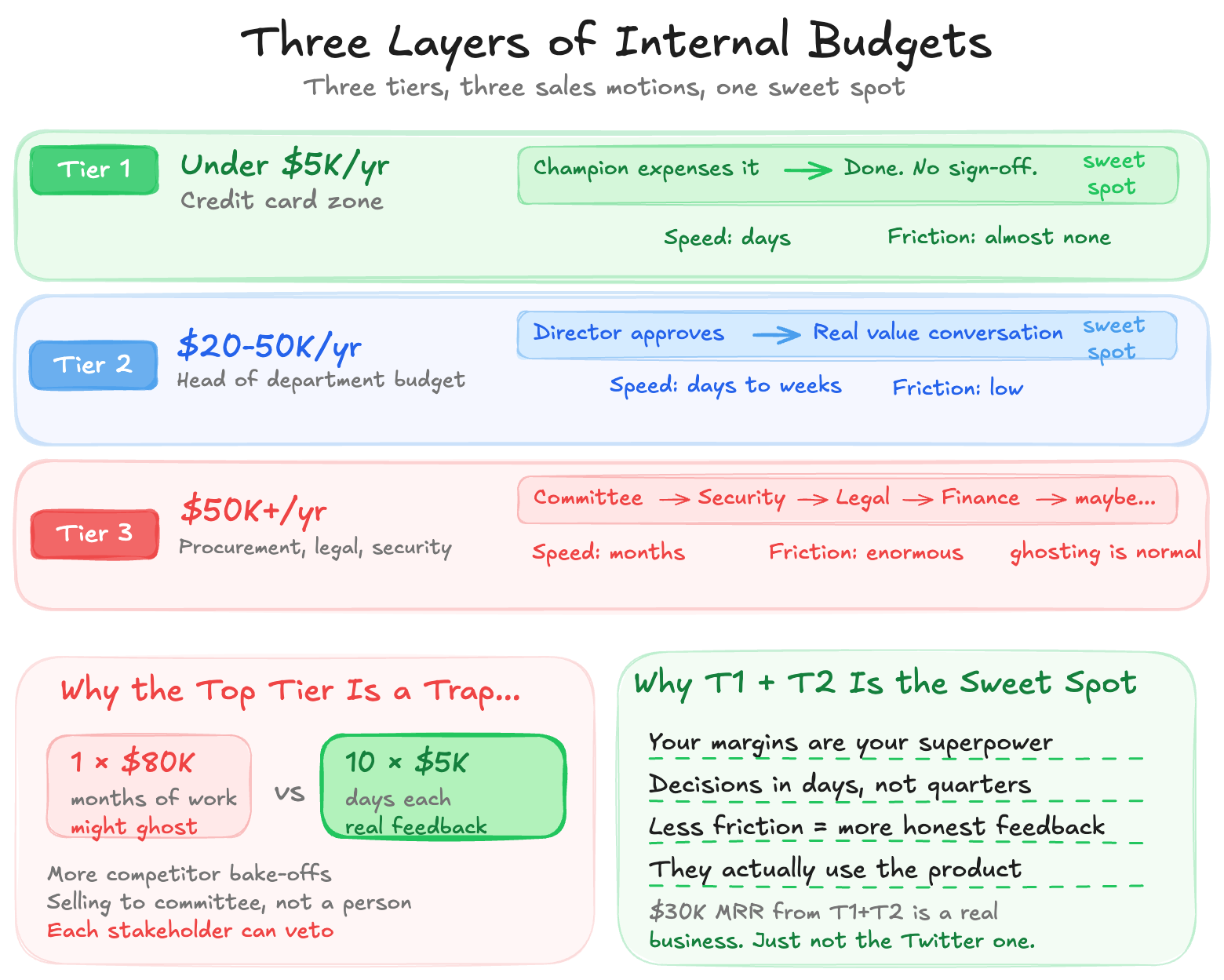
When I started selling, I had no idea internal budgets even worked the way they do. I just picked a price and hoped people would pay it. After 50+ conversations with companies of all sizes, a pattern started showing up that nobody really talks about openly.
There are three rough tiers of how money gets spent inside a business. Credit card budget. Head of department budget. And the tier above that, where procurement, legal, and security all get involved. Each one moves at a completely different speed, and each one needs a completely different sales motion. The higher you climb, the slower it gets and the more pushback you’ll hit.
I’ve tried to chase the top tier a few times and honestly, it’s been more challenging than I thought. Here’s what I’ve learned about each tier, and why I think most bootstrappers should be aiming for the bottom two on purpose.
The Three Tiers Of Internal Budget
- Tier 1: The credit card zone. Roughly under $4-5k a year. Your champion can just expense this. No sign-off, no committee, no procurement. They buy it, you onboard them, done.
- Tier 2: Head of department budget. Roughly $20-50k a year. A head of engineering, head of platform, or director has their own budget pool and can approve this without escalating. Still fast, but they want a real conversation about value.
- Tier 3: Above that. Anything beyond ~$50k usually triggers procurement, legal review, security questionnaires, and multiple stakeholders. This is a different game entirely.
- Think about which tier your current price actually lands in at your target customer. Not the price you wish you charged. The one you do.
- The thresholds vary by company size and country, but the shape of it is surprisingly consistent. Worth asking your champion early: “what’s your sign-off threshold?”
Why The Top Tier Is Harder Than It Looks
- Procurement processes can take months. I’m in one right now that’s been moving for ages. You can’t plan revenue around something this slow.
- More money means more competitor analysis. The higher the price, the more likely they’ll run you against three or four alternatives. Suddenly you’re in a bake-off you didn’t sign up for.
- Ghosting becomes the norm. Big deals stall, champions move jobs, priorities shift. The bigger the deal, the more things can kill it before it closes.
- You’re selling to a committee, not a person. Security, legal, finance, the actual user, their boss. Each one can veto. Each one needs a different version of the pitch.
- Something to consider… if you factor the time cost of chasing one $80k deal versus closing ten $5k deals, the maths often doesn’t favour going up.
Why The Bottom Two Tiers Are A Sweet Spot For Bootstrappers
- Your margins are your superpower. As a small team, you don’t have a sales org, a huge AWS bill, or 200 engineers to pay. You can charge less than the giants and still run a great business.
- Decisions happen in days, not quarters. A head of engineering can say yes on a call. That’s a completely different cash flow reality.
- You don’t need to win every enterprise to win. A few hundred customers paying tier 1 and tier 2 prices is a real business. It’s just not the one that gets written about on Twitter.
- Less friction means more honest feedback. People at this tier actually use the product and tell you what’s wrong. The top tier often buys based on slides and never logs in.
- Think about what “enough” looks like for you. If $30k MRR from tier 1 and tier 2 customers is the goal, the path is genuinely shorter than chasing one enterprise whale.
What I’d Do Differently If I Was Starting Again
- Ask about the procurement process before you quote a price. “What does buying something like this usually look like for you?” tells you everything about which tier you’re in.
- Price for friction-free buying when you can. If you can keep your first tier under the credit card threshold, you remove the single biggest reason deals stall.
- If you go up a tier, sell on cost savings, not features. The higher the budget, the more they need to justify the spend internally. Help your champion build that case for you.
- Build the low-tier muscle first. Get good at closing fast, small deals before you try to land an enterprise. The reps you get here are how you survive long enough to climb.
- Don’t apologise for charging less than the giants. You’re not them. You don’t have their costs. That’s the whole point of being small.
- Honestly… I’m still figuring the top tier out. And I’m increasingly OK with the idea that maybe I don’t need to crack it to build something I’m proud of.
Related Visuals
My First Sale and What I Learned About Turning Free Users Into Paying Customers
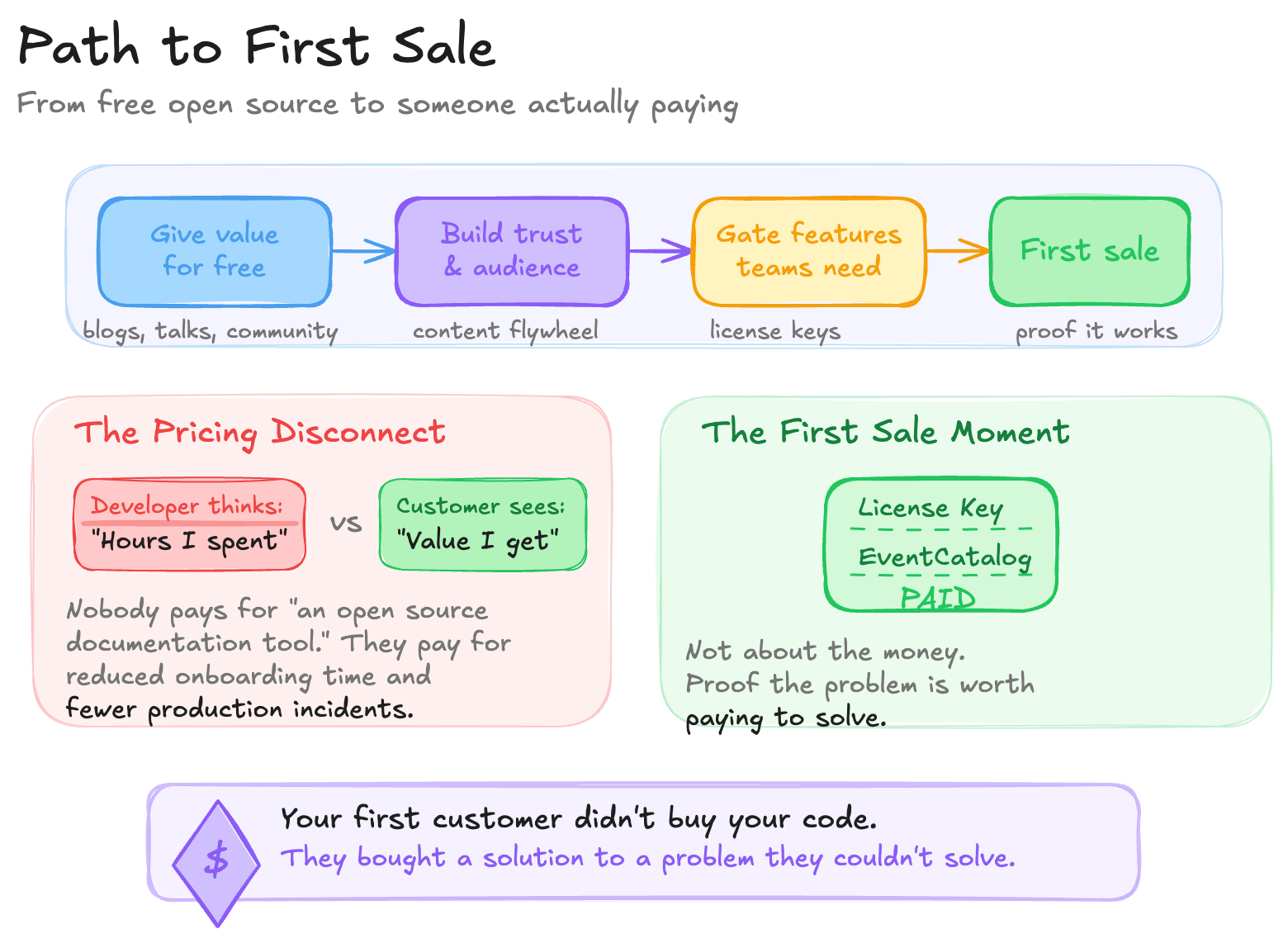
How I went from free open source project to someone actually paying me for it.
How Internal Champions Helped Me Grow EventCatalog and Why They're Worth More Than Any Marketing Campaign
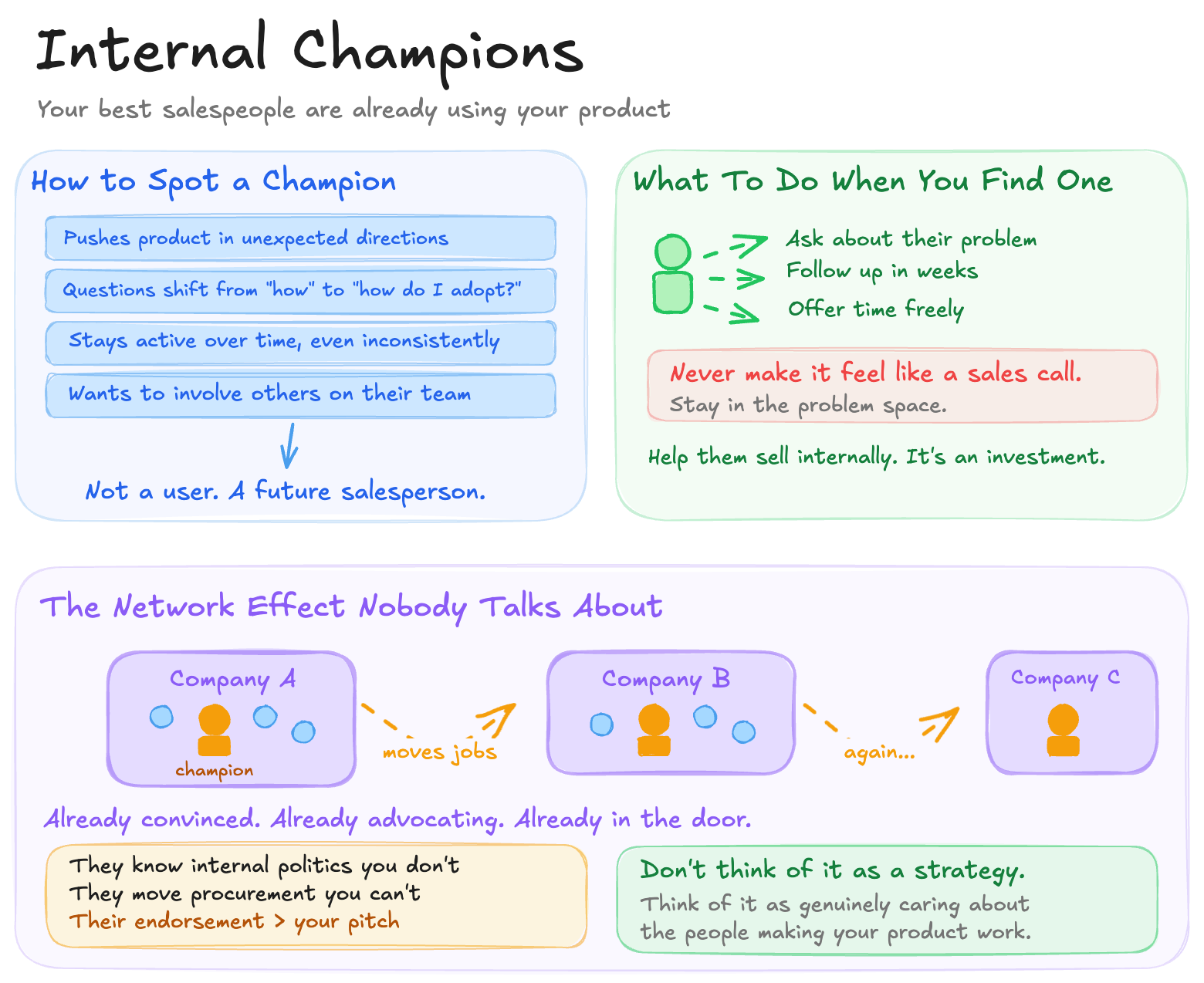
The people already using your product are often your best salespeople -- if you treat them like more than just users.
Why Being a One Person Company Is Actually a Superpower
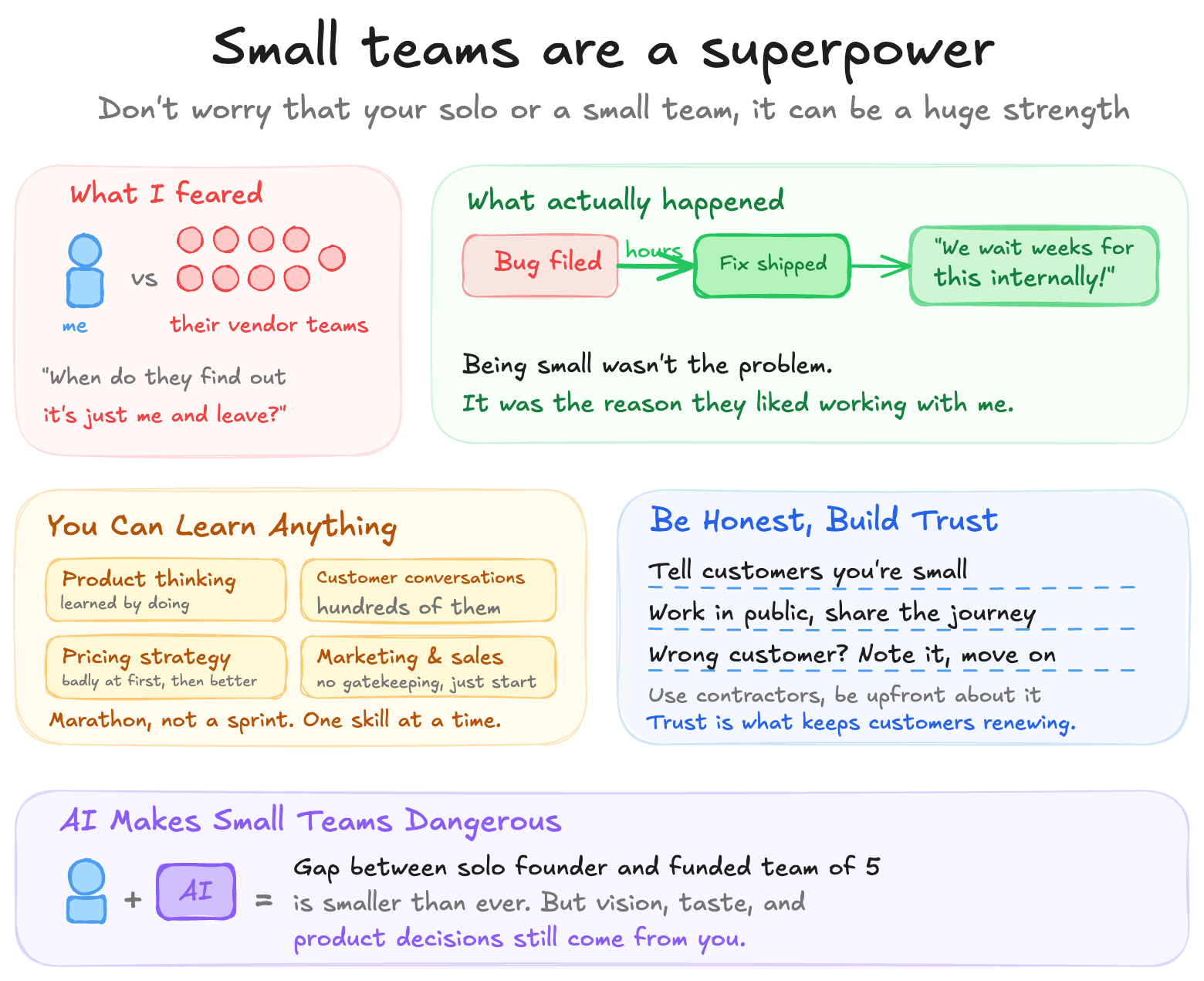
Being small feels like a weakness until you realize it's the thing your customers actually value.
New visual every week
Short visual breakdowns on pricing, growth, and the realities of bootstrapping. Delivered to your inbox. No fluff.