How Internal Champions Helped Me Grow EventCatalog and Why They're Worth More Than Any Marketing Campaign
The people already using your product are often your best salespeople -- if you treat them like more than just users.
Someone gave me a piece of advice early on that I didn’t fully appreciate at the time. They told me that word of mouth in developer communities is unlike any other channel. Developers move between companies. They carry their tools with them. And if someone loved your product at their last job, there’s a real chance they’ll push for it at the next one.
I nodded along. I thought I understood. I didn’t really understand until I started seeing it happen.
It wasn’t a marketing campaign or a blog post that moved the needle. It was individual people inside companies who cared enough to push things forward. They ran internal demos. They answered procurement questions. They convinced the person with budget. And when they moved to a new company, they started the whole thing over again — this time already sold on EventCatalog. The power of that took a while to sink in, but once it did, the way I thought about my users changed completely.
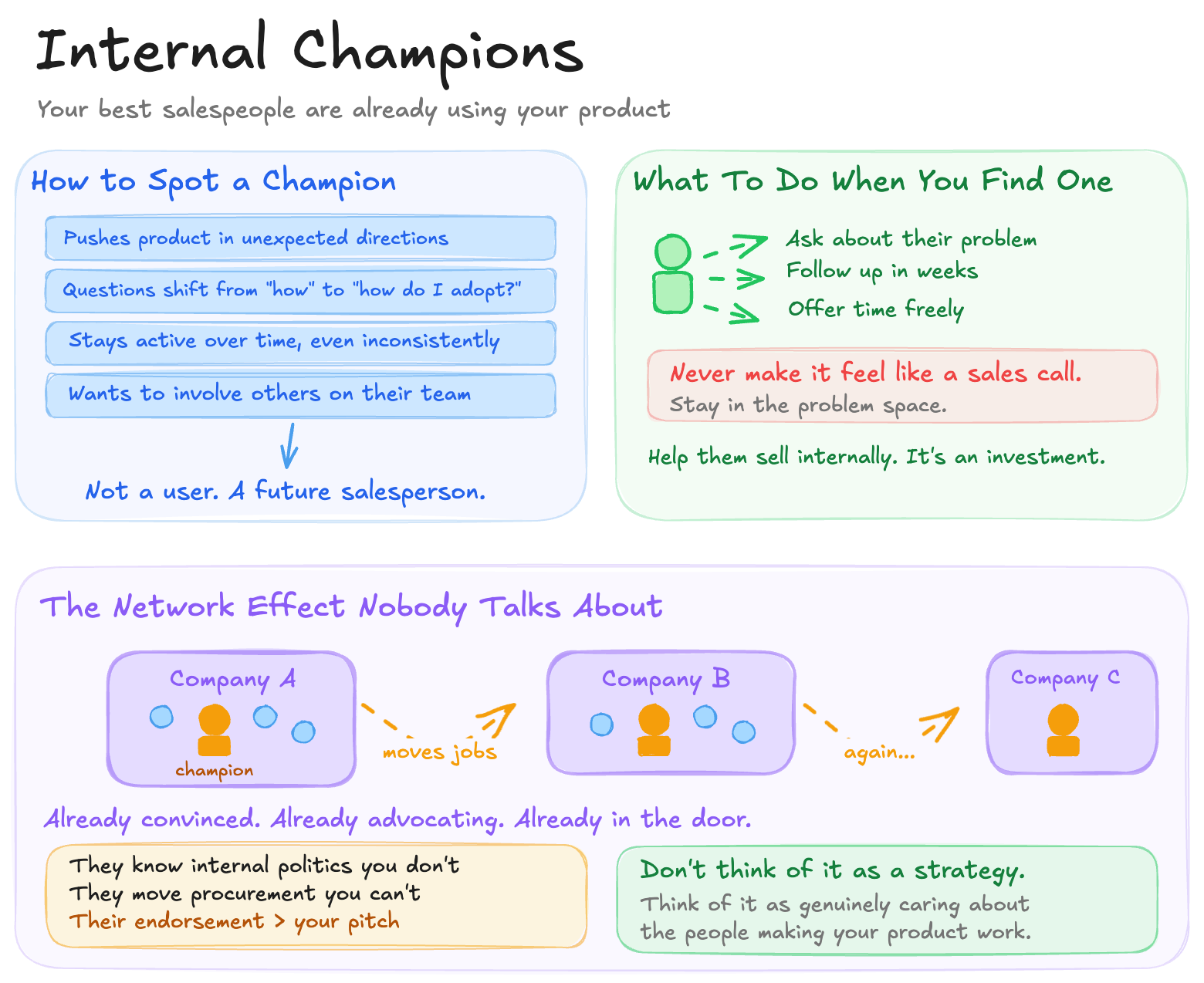
How to Spot an Internal Champion
Most champions will find you before you find them. They show up in Discord, ask detailed questions over email, or open issues that go way beyond a typical bug report. A few things to look for:
- They push the product in unexpected directions. Writing automation scripts, building integrations you didn’t plan for, finding creative workarounds. This tells you they care enough to go deep.
- Their questions shift from “how do I do this?” to “how do I get this adopted?” That’s the signal. They’re thinking about their team, not just themselves.
- They stay active over time, even if inconsistently. Champions go quiet for months and then come back. Don’t write someone off because they’re silent for a while.
- Think about who in your community is giving you the most honest, detailed feedback. That person is probably a champion worth investing in.
- They proactively want to involve others. They’ll ask if you can jump on a call with their team, or if you can help them put together something to share internally.
What to Do When You Find One
The instinct is to pitch them. Resist that. The relationship works best when you’re genuinely curious about their problem, not trying to push a sale.
- Ask what brought them to your product. Not “what do you use EventCatalog for?” but “what problem were you trying to solve when you found it?” The answer tells you far more and immediately signals that you’re listening.
- Follow up. Make a note to check back in a few weeks. Did they solve the problem? Did they manage to get adoption internally? Most people never ask this, and it matters.
- Offer your time freely when it makes sense. I’ve jumped on internal presentations, helped draft emails to procurement, answered security questionnaires. This is not a loss of time. It’s an investment in someone who is actively trying to help your product grow.
- Something to consider: most people just want to be listened to. You don’t have to have all the answers. Showing up and engaging honestly is often enough.
- Never be product-focused in these conversations. The moment it feels like a sales call, you lose the relationship. Stay in the problem space.
Why They’re Your Best Salespeople
Here’s the thing about selling into a company: you’re almost never talking to the person with the budget. Your champion is.
- They know the internal politics you don’t. Who needs to approve it. Who’s going to object. What framing will land. You have none of that context. They have all of it.
- They can move procurement along in ways you can’t. Security reviews, legal questions, vendor assessments. A champion who’s already convinced internally will push through these things far faster than any sales process you could run yourself.
- Their endorsement carries weight yours doesn’t. You’re always going to sound like you’re selling something. They sound like a colleague making a recommendation.
- Think about what it would cost to replicate that kind of advocacy through any other channel. You can’t buy it. You can only earn it.
- The feedback they give you is some of the most valuable you’ll get. They’re close enough to real usage to tell you what’s actually broken or missing, and they care enough to be honest about it.
The Network Effect Nobody Talks About
This is the part that surprised me most. Champions don’t just help you inside one company. They carry your product with them when they move.
- Developers use tools they’ve already trusted. When someone joins a new team and faces a familiar problem, their first instinct is to reach for something that worked before. If that’s your product, you’re already in the door.
- One strong relationship can quietly multiply across years and organizations. I’ve seen this happen more than once with EventCatalog. A champion from one company surfaces at another, already convinced, already advocating.
- Nurturing a champion is a long-term bet with compounding returns. The time you put in now pays off in ways you won’t be able to trace directly, and that’s fine.
- Something to consider: this is why treating champions like regular users is such a missed opportunity. The upside is completely disproportionate to the effort.
- Be human about it. Don’t think of it as a strategy. Think of it as genuinely caring about the people who are already trying to make your product work in their world. The network effect is a byproduct of that, not the goal.
Related Visuals
My First Sale and What I Learned About Turning Free Users Into Paying Customers
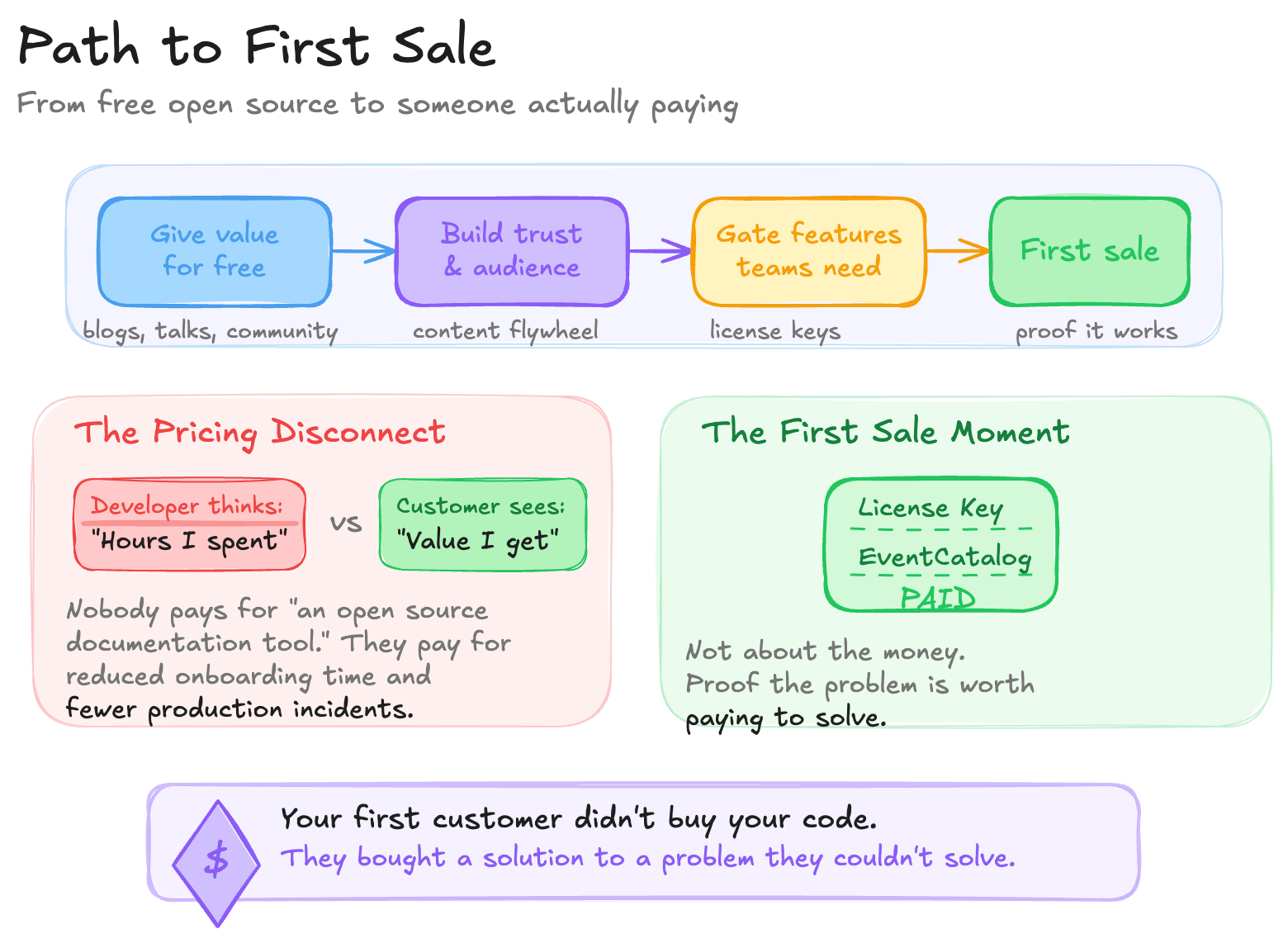
How I went from free open source project to someone actually paying me for it.
Why I Spent All My Time Chasing New Customers and What I Learned When Renewals Hit
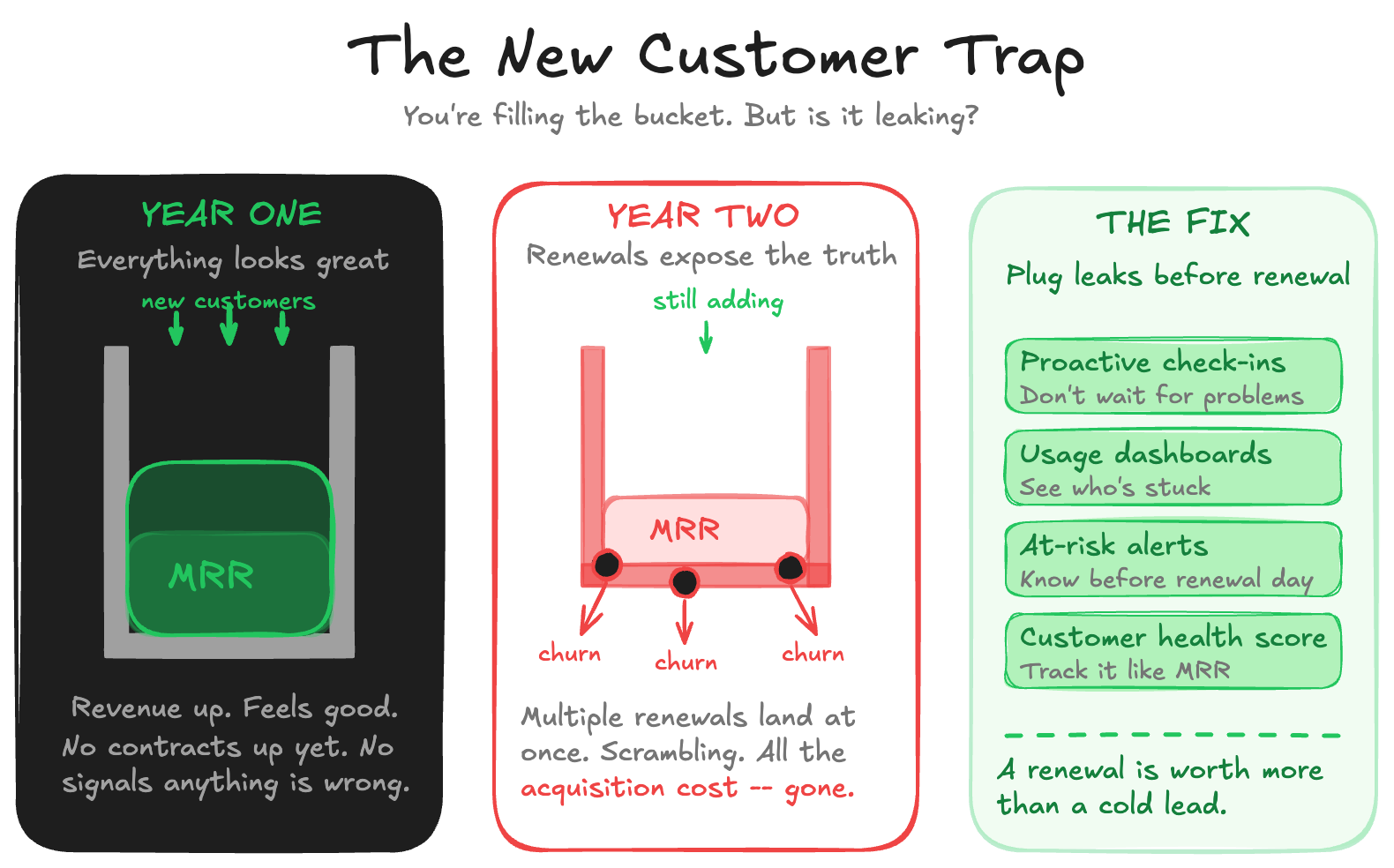
What happens when you focus all your energy on acquisition and forget the people already paying you.
How I Turned Content Into a Growth Engine and Why It Works Better Than Ads
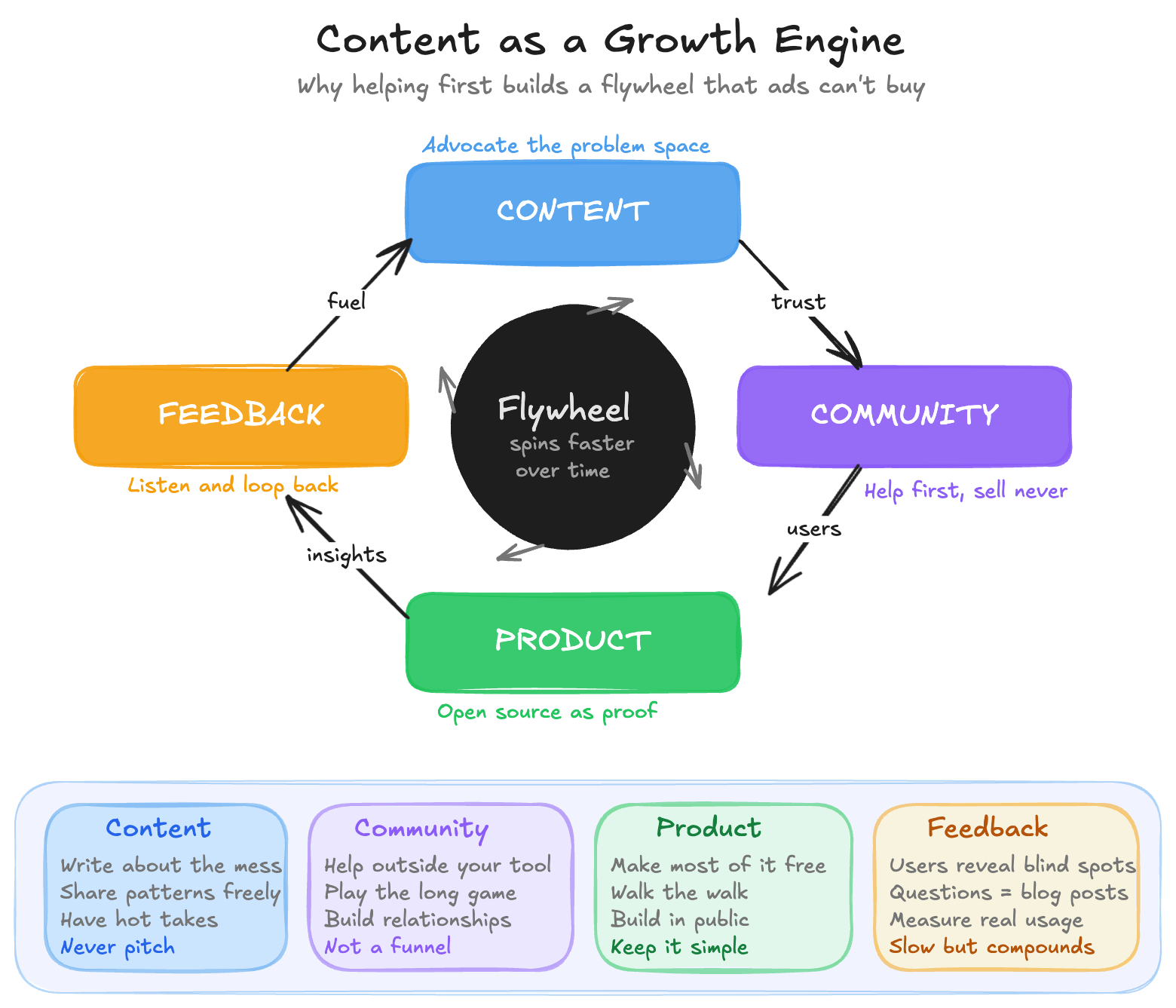
Why developer advocacy and problem-space thinking created a compounding growth flywheel for me
New visual every week
Short visual breakdowns on pricing, growth, and the realities of bootstrapping. Delivered to your inbox. No fluff.