I Confused Shipping Speed With Product Speed
Shipping fast doesn't mean shipping smart. Here's what I learned about finding the right release cadence when your users have jobs and limited bandwidth.
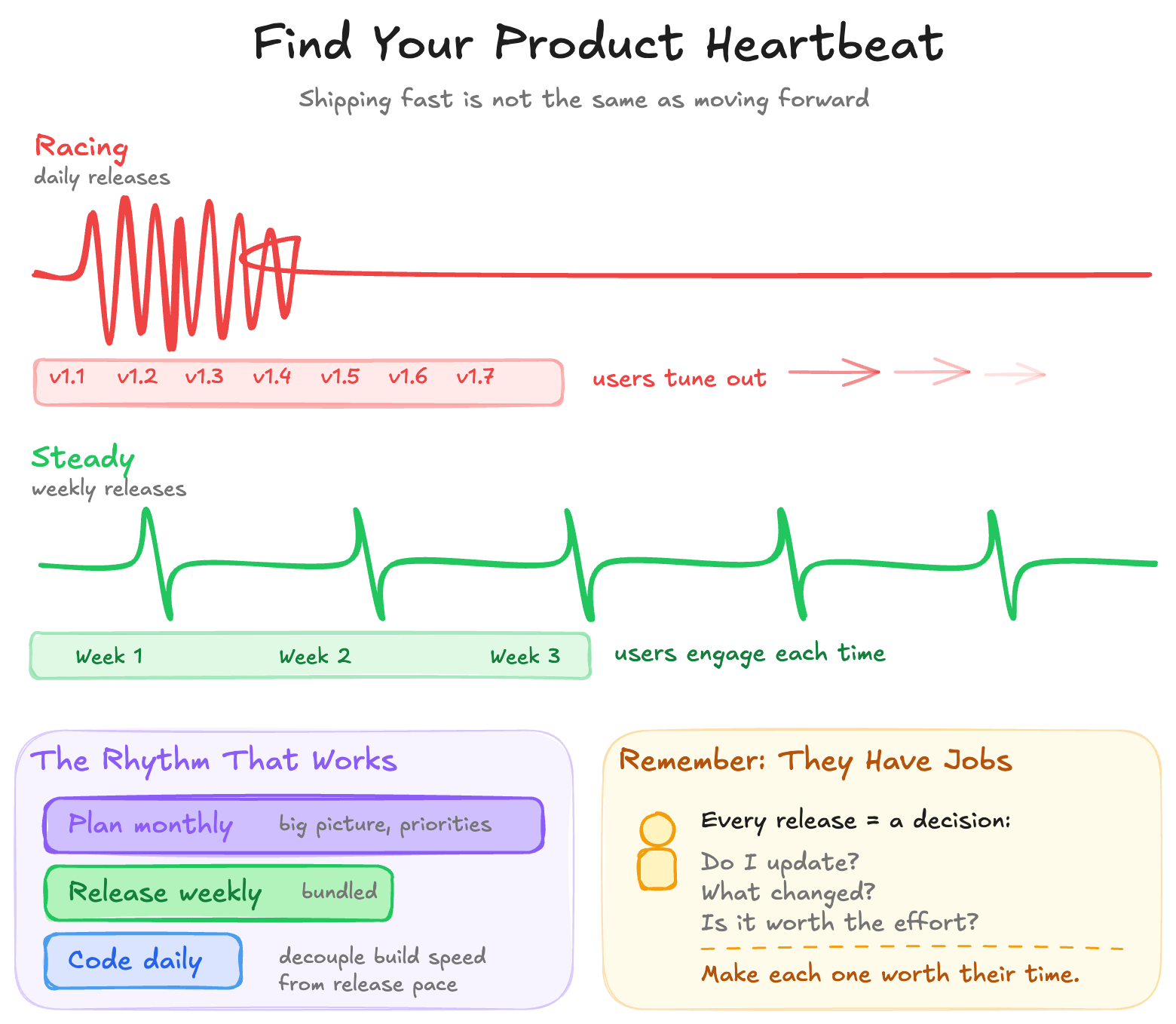
For a while, I was shipping features almost every day. Sometimes multiple times a day. With AI tooling making it easier to move fast, it felt productive. I’d wake up with an idea, have it in production by afternoon, and announce it to the community. Rinse and repeat.
But something started to shift. Social engagement was declining. People were still using EventCatalog, but the excitement around releases felt… muted. Then a few users started giving me feedback, gently at first. “The pace is a bit much.” “Hard to keep up with all the changes.” It hit me: I was creating noise, not momentum.
I had to relearn something fundamental. My users have jobs. They have their own projects. EventCatalog is self-hosted, which means every release is a decision they have to make. Do I update? What changed? Is it worth the effort? I was moving at my pace as a builder, not their pace as users trying to get work done. Here’s what I’ve learned about finding the right heartbeat for a product.
The Trap of Shipping Too Fast
- Just because you can build fast doesn’t mean you should release fast. AI tooling and modern dev workflows make it easy to ship features daily. That speed is a tool, not a strategy.
- Think about what “momentum” actually means. It’s not how many features you ship. It’s whether people notice, care, and adopt what you’re building. Constant releases create noise that drowns out the signal.
- Engineering speed and product speed are different things. You can code every day and still release weekly. Use the time between releases to bundle features, write better docs, and craft updates that are easier to digest.
- Something to consider: when everything is urgent and new, nothing feels important. Your users tune out when the release cadence becomes background noise.
- Developers love to build. It’s what we do. But product work is just as important as coding. Planning, bundling, positioning, communicating… that’s the stuff that turns features into value.
The Signal You’re Overdoing It
- Watch your engagement metrics. If people used to react to your releases and now they don’t, that’s not a content problem. That’s a frequency problem.
- Listen when users tell you the pace is too much. They’re being polite. What they mean is: “I can’t keep up and it’s starting to feel like work to follow your project.”
- Self-hosted products have a different rhythm than SaaS. Every release asks your users to take action. Update the dependency. Test it. Deploy it. Respect that friction.
- Think about how you feel when a tool you use releases updates constantly. It’s exhausting. Your users feel the same way about your product.
- Something to consider: if you’re releasing daily and getting less engagement than when you released weekly, the market is telling you something. Slow down and let each release land.
Finding Your Heartbeat
- The rhythm that’s working for me: plan monthly, release weekly, code daily. Plan the bigger picture once a month. Reconcile priorities every week. Ship one meaningful update per week. Code and fix issues as they come up.
- Think about bundling features instead of shipping them one at a time. Three small features in one release feels like progress. Three releases in three days feels like chaos.
- Weekly releases create a predictable rhythm. Your users know when to expect updates. You have time to write good changelogs and explain what changed. Everyone wins.
- Something to consider: consistency beats intensity every time. A heartbeat is steady. It’s reliable. It doesn’t race, and it doesn’t flatline.
- Don’t confuse building with shipping. You can work on five things at once. Just don’t release all five at once. Use your velocity to build a backlog of polished features, then release them at a sustainable pace.
- The “plan weekly, release weekly” idea resonates because it decouples your internal pace from your external communication. Ship on a schedule that respects your users’ bandwidth, not your build speed.
What Your Users Actually Need
- High-quality releases beat high-frequency releases. Spend the extra time writing better docs, better changelogs, better examples. Your users will engage more when each release feels complete.
- Think about the cognitive load you’re putting on your audience. Every release is a micro-decision for them. Do I update? Do I read the changelog? Do I test it? Make those decisions worth their time.
- Your users have jobs, side projects, and limited attention. Especially in the developer tools space, your audience is busy. They want to see progress, but they can’t track constant change.
- Something to consider: self-hosting means your users are responsible for keeping your product running. The more you release, the more work you’re creating for them. Be thoughtful about that trade-off.
- Developers want simple solutions to hard problems. Spend your time making the product simpler, not just adding features. That’s where the real value is, and it takes longer than you think.
- Remember: you’re building for the long term. A sustainable pace now is better than burning out your users (or yourself) with unsustainable intensity.
Related Visuals
Why I Quit My Job to Build EventCatalog and What I Learned About Taking the Leap
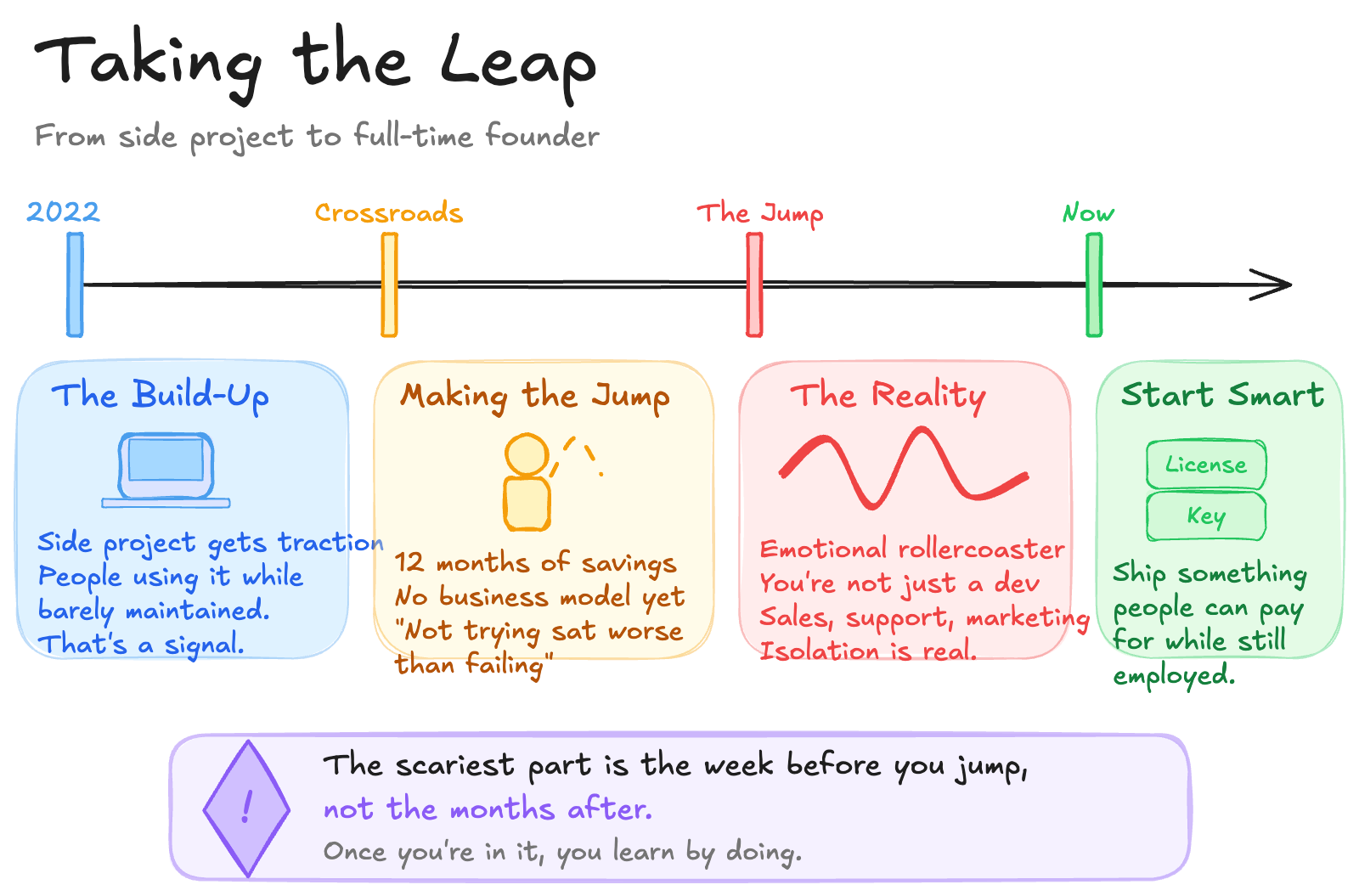
What it really looks like to leave your job and go all-in on an open source project.
My First Sale and What I Learned About Turning Free Users Into Paying Customers
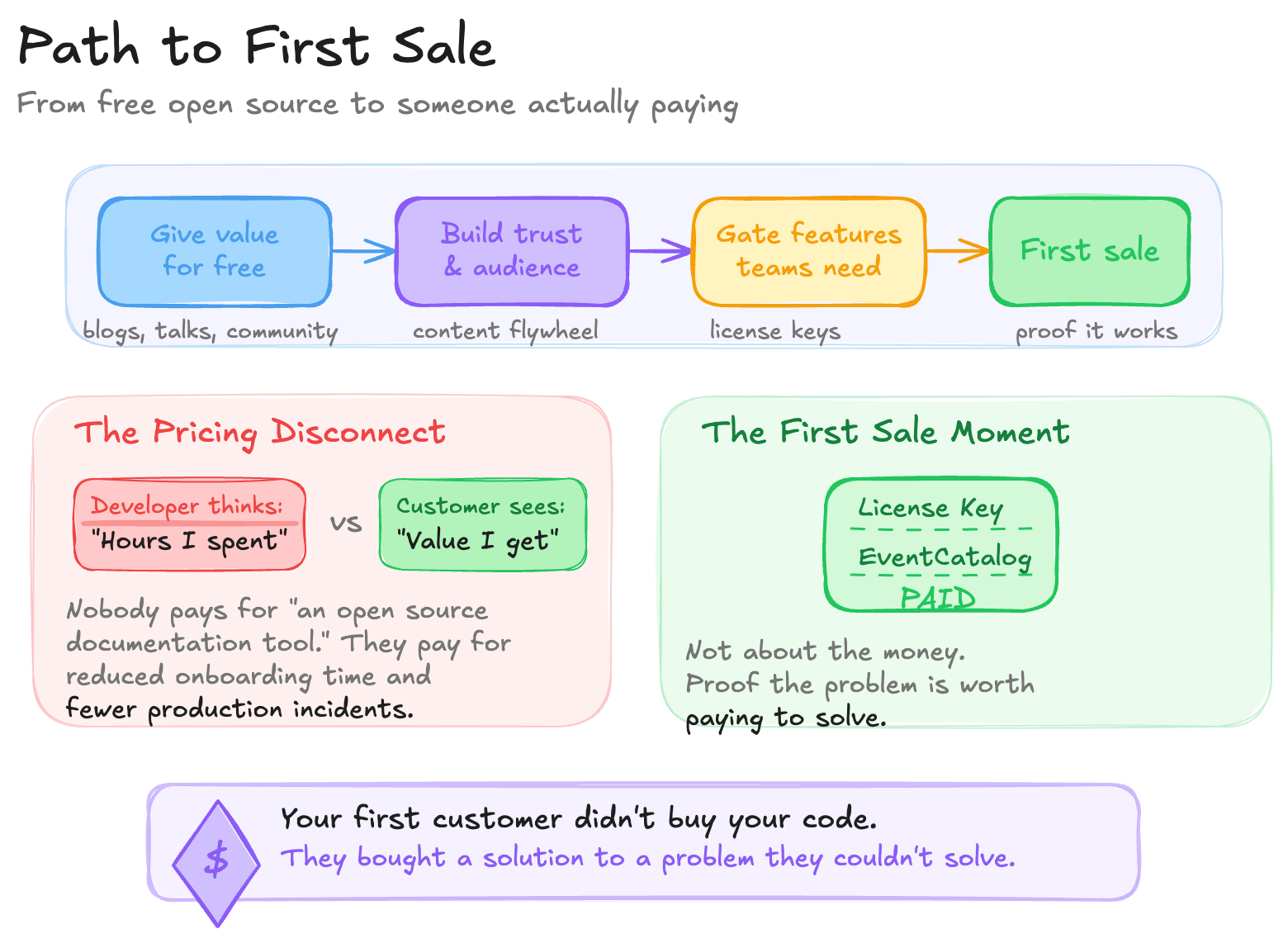
How I went from free open source project to someone actually paying me for it.
New visual every week
Short visual breakdowns on pricing, growth, and the realities of bootstrapping. Delivered to your inbox. No fluff.