Why Building Solo Is the Hardest Thing I've Ever Done and What Keeps Me Going Anyway
What nobody tells you about the psychological grind of bootstrapping alone, and how to stay in the game.
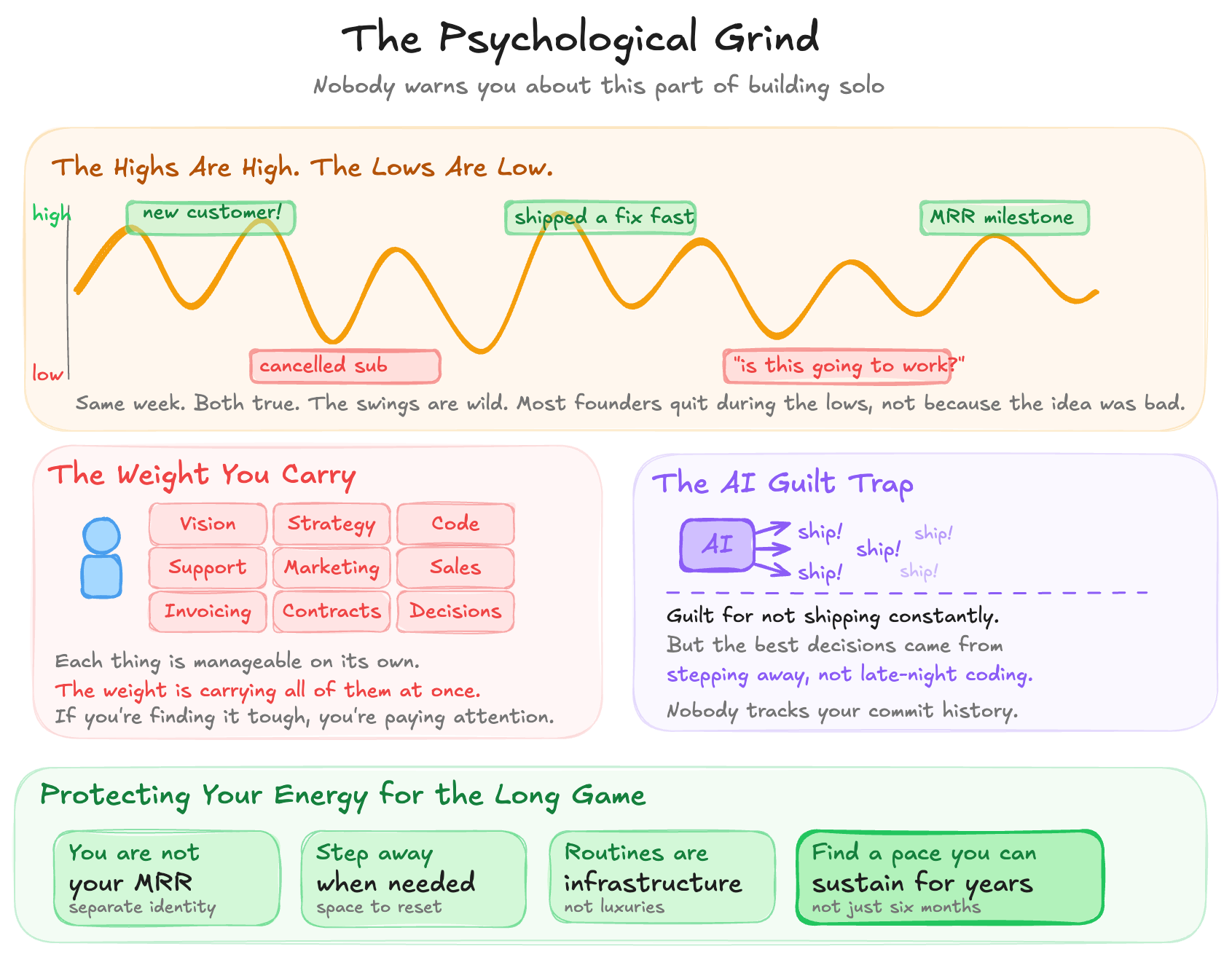
Nobody warns you about this part. You see the tweets, the revenue screenshots, the “I quit my job and here’s what happened” threads. And look, a lot of it is real. Building something of your own is genuinely one of the most rewarding things I’ve ever done. But there’s a side to it that people gloss over, and it caught me off guard.
The psychological weight of doing this alone is something else. Every decision is yours. Every slow week is yours. Every morning where you wake up and think “is this actually going to work?” is yours to sit with. I’ve had moments where the momentum feels unstoppable, and I’ve had stretches where opening my laptop felt impossible. Both of those things are true, sometimes in the same week.
This is the hardest thing I’ve ever done in my career. Not technically. Not strategically. Psychologically. And I think more people need to hear that, because if you’re in the middle of it and struggling, nothing is wrong with you. It’s just part of the deal.
The Grind Nobody Talks About
- The “dream” is real, but so is the grind underneath it. Most of what you see online is the highlight reel. The day-to-day reality is uncertainty, long hours, and carrying every single decision on your shoulders.
- Think about the last time you had a tough week at a job. Now imagine that week with no team, no manager to share the load, and no guarantee that any of it will pay off. That’s the baseline.
- You’re not just building a product. You’re managing everything. Vision, strategy, support, marketing, sales, code, infrastructure. The mental load of context-switching between all of these is exhausting in a way that’s hard to explain until you live it.
- Something to consider: the hardest part isn’t any single problem. It’s the accumulation. Each thing is manageable on its own. The weight comes from carrying all of them at once, all the time.
The Highs Are High, the Lows Are Low
- Prepare yourself for an emotional range you’ve probably never experienced in a regular job. One customer email can make your whole week. Another one can ruin your afternoon. The swings are real.
- Most founders who quit don’t quit because the idea was bad. They quit during the low stretches because nobody told them the lows were normal. If you can hold on through those periods, you’re already ahead of most people.
- Think about motivation differently. It’s not something you have or don’t have. Some days you’ll feel unstoppable. Other days, showing up and moving the dial by 1% is the win. Both count.
- Deep down you know it’s a marathon, but your brain wants it to be a sprint. Turning up every day, doing the small things, trusting the process… it sounds simple but some days it feels impossible. That’s part of it.
- Something that helps: remind yourself why you started. Not the business case. The real reason. The thing that made you jump in the first place.
The AI Guilt Trap
- AI can make you feel like you should be shipping constantly. Features feel like progress, and when AI makes feature development faster, you start to feel guilty for doing anything else. This is a trap.
- Think about what actually moves your business forward. Customer relationships, strategic thinking, planning, positioning… none of these are features, but all of them move the dial. AI can’t do this work for you.
- Watch out for the “always more to build” spiral. Just because you can ship another feature tonight doesn’t mean you should. Sustainable pace matters more than shipping velocity.
- Something to consider: the pressure to keep building is partly self-imposed. Nobody is tracking your commit history. Your customers care about whether the product solves their problem, not how many features you shipped this week.
- If you catch yourself feeling guilty for stepping back to think, plan, or rest… that’s the trap talking. The best decisions I’ve made for the business came from stepping away, not from late-night coding sessions.
Protecting Your Energy for the Long Game
- You are not your MRR. A bad month doesn’t make you a failure. A good month doesn’t make you a genius. Separate your identity from your metrics or the rollercoaster will break you.
- Step away when you need to. Change your environment. Take a full day off. Play with some completely unrelated tech for fun. Your brain needs space to reset, and you’ll come back with better ideas than if you’d pushed through.
- Think about building routines that protect your mental health before you need them. Exercise, time outside, talking to people who aren’t in the startup world. These aren’t luxuries. They’re infrastructure.
- Going 24/7 is not sustainable, and it’s easy to fall into this trap. Especially when you’re passionate about what you’re building. But burning out doesn’t ship features either. Protect your pace like you’d protect your runway.
- Something worth remembering: the founders who make it to the other side aren’t the ones who worked the hardest for six months. They’re the ones who found a pace they could sustain for years. Play the long game with your energy, not just your strategy.
Related Visuals
Why I Quit My Job to Build EventCatalog and What I Learned About Taking the Leap
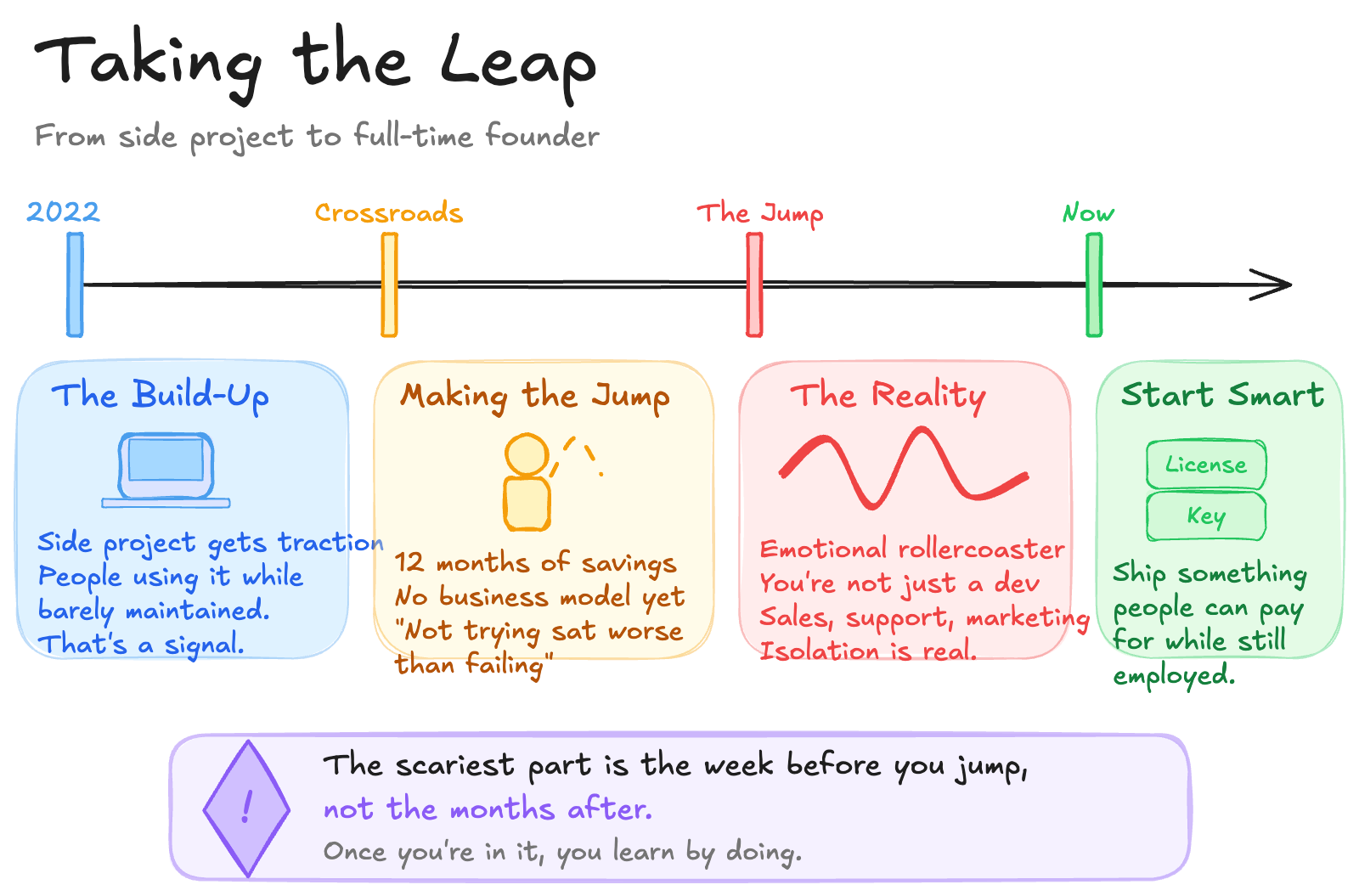
What it really looks like to leave your job and go all-in on an open source project.
How AI Made Scope Creep My Biggest Threat and Why Speed Is Not a Strategy
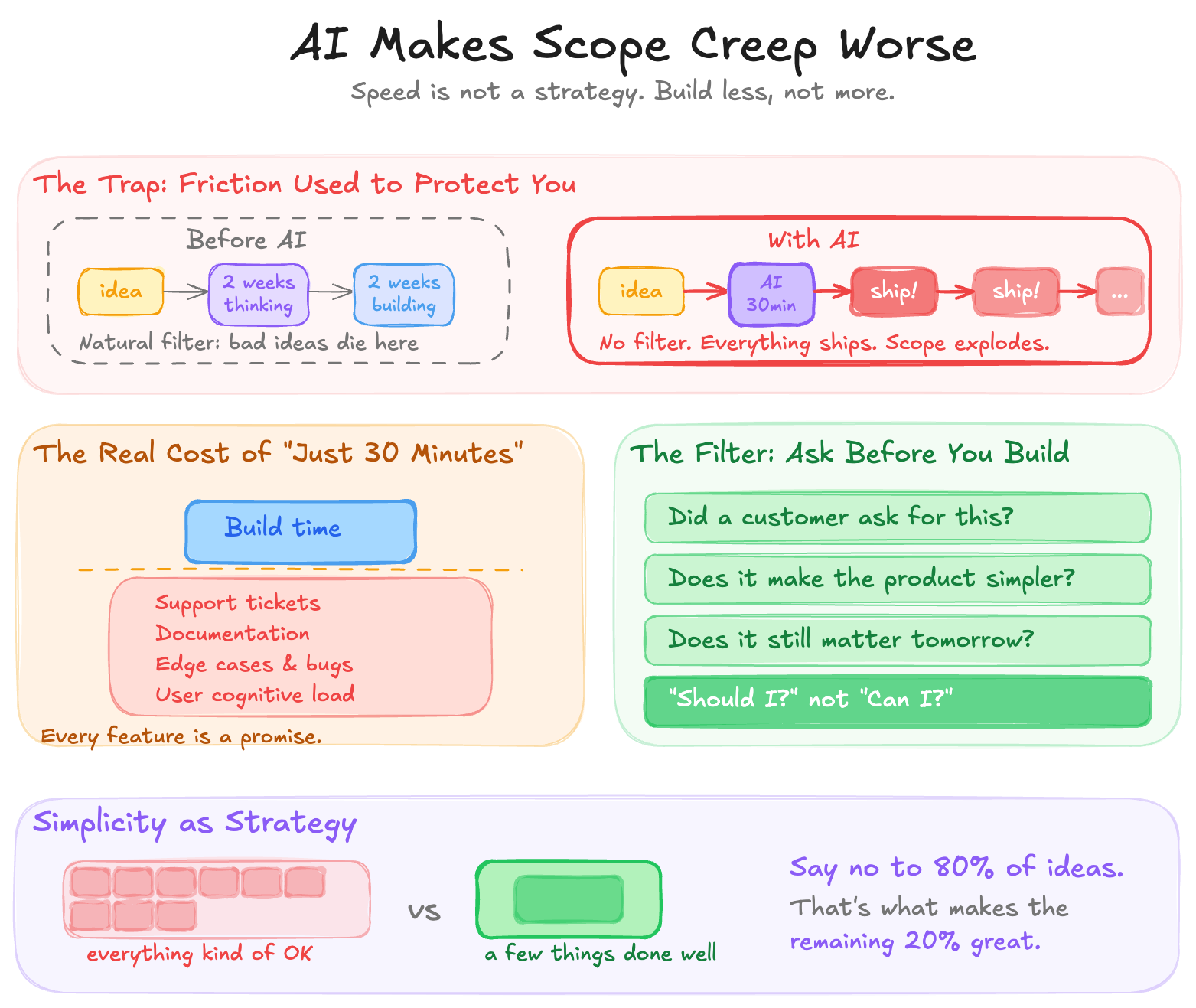
AI makes building faster than ever. That's exactly why it's more important than ever to build less.
Why Being a One Person Company Is Actually a Superpower
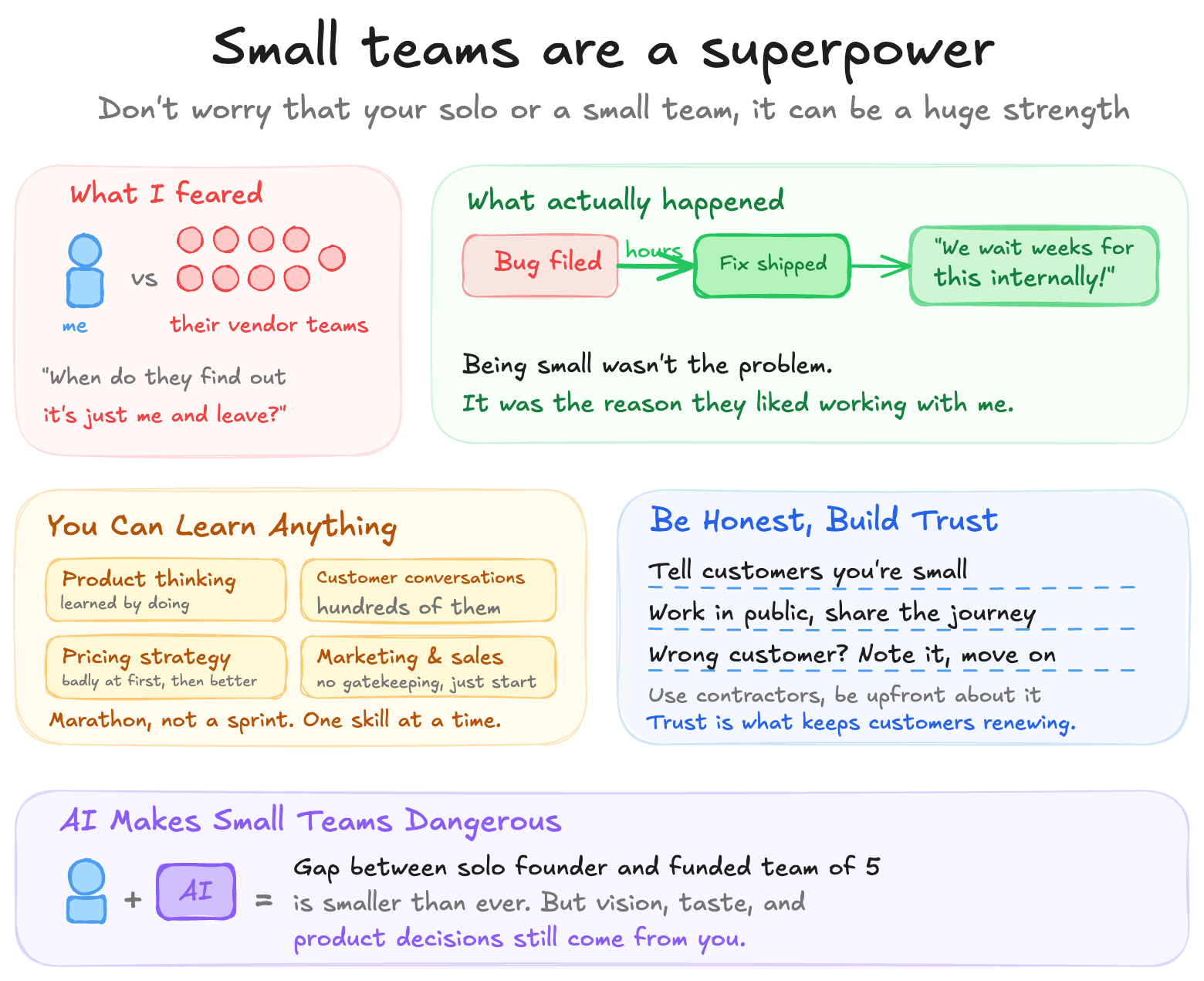
Being small feels like a weakness until you realize it's the thing your customers actually value.
New visual every week
Short visual breakdowns on pricing, growth, and the realities of bootstrapping. Delivered to your inbox. No fluff.