Why You Have to Stop to Move Forward
The pressure to keep shipping is real, but the smartest thing you can do for your company is step away from it.
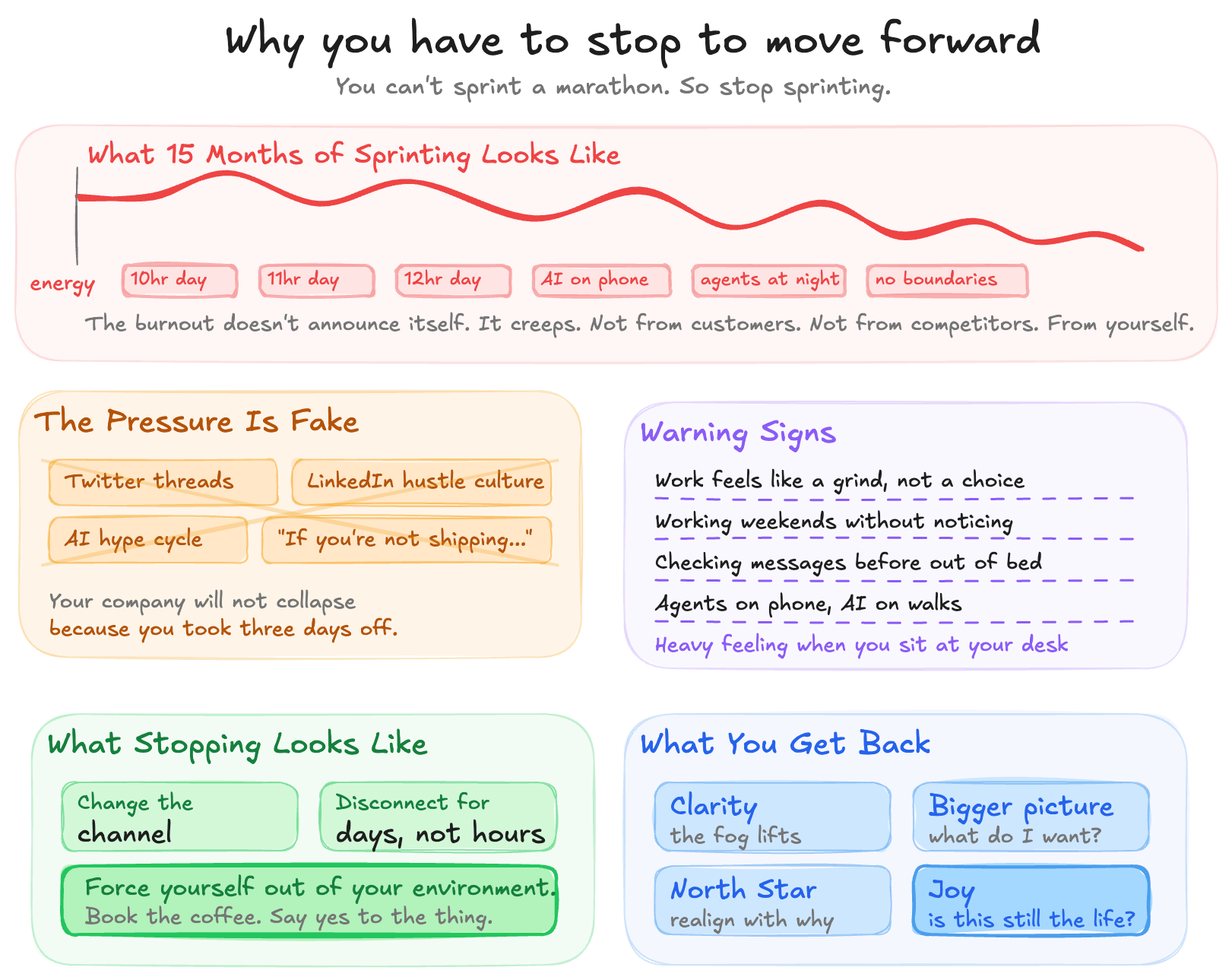
I’ve been building EventCatalog full-time for about 15 months now. This week, something shifted. It wasn’t dramatic. I had a podcast that pulled me out of the office, tax year paperwork that forced a change of pace, and suddenly I realized I hadn’t thought about shipping a single feature in days. And honestly? It felt incredible.
Over the last few weeks I’d been feeling this pressure building. Not from customers, not from competitors. From myself. The voice in my head saying keep going, keep building, keep up. AI is moving fast, people are shipping, you can’t afford to slow down. I was doing 10, 11, 12 hour days at my desk. I had AI agents on my phone. I was connected to this thing around the clock. And I didn’t even notice how much it was draining me until I stepped away.
What I realized this week is that stopping isn’t the opposite of progress. It might be the most important part of it. You can’t sprint a marathon. And what we’re building here, these bootstrapped companies, these solo projects… they’re marathons. Here’s what I wish someone had told me sooner.
The Pressure Is Fake (But It Feels Very Real)
- The “always be building” mindset is everywhere right now, and most of it is noise. LinkedIn, Twitter, the AI hype cycle. It all tells you that if you’re not shipping, you’re falling behind. Step away for a few days and you realize how little of that urgency is actually real.
- Think about where your pressure is actually coming from. Is it your customers? Your revenue? Or is it a feed full of people announcing things?
- Code is half the problem now. The barrier to building is almost gone. Any idea you have, you can bring to life. But product-market fit, customer relationships, solving real problems… that stuff still takes slow, careful thinking. You can’t rush it by shipping faster.
- The guilt of stopping is manufactured. Yes, your customers have issues. Yes, there’s always more to build. But this is fake pressure we put on ourselves to constantly stay on the ball. Your company will not collapse because you took three days off.
- Something to consider: do you actually need AI agents running pull requests for you while you sleep? Do you need to be connected 24/7? I don’t. I want to spend time touching grass and being with my family. That’s not a weakness. That’s the whole point.
Warning Signs You Need to Stop
- When the work starts feeling like a grind instead of a choice, pay attention. You started this because you wanted to. If it’s starting to feel like something you have to do, that’s a signal.
- Check in with yourself honestly. How do you feel about the project right now? Not the metrics, not the roadmap. How do you actually feel when you sit down at your desk? If the answer is heavy, that’s enough of a reason to step back.
- Think about your daily patterns. Are you working weekends without noticing? Checking messages before you’re even out of bed? Doing 12 hour days and telling yourself it’s fine because “this is what it takes”?
- 15 months of solo building will catch up with you. It doesn’t matter how passionate you are. Nobody can sprint for months on end without paying a price. The burnout doesn’t announce itself. It creeps.
- Having agents on your phone, talking to AI on walks, working from every room in your house… these aren’t signs of productivity. They’re signs you’ve lost the boundary between work and life. And losing that boundary is not a strategy.
What Stopping Actually Looks Like
- Stopping doesn’t mean quitting. It means changing the channel. Stop doing the day-to-day stuff you always do. Read something unrelated. Go somewhere different. Break the routine that’s become invisible to you.
- Disconnect for days, not hours. An afternoon off doesn’t reset anything. You need enough space that your brain actually lets go of the daily loop. That takes longer than you think.
- Force yourself out of your environment. This week a podcast physically pulled me out of my office. That external commitment was the thing that broke the cycle. Book the coffee, schedule the call, say yes to the thing that gets you away from your desk.
- Think about this: when was the last time you sat back and took a genuinely holistic view of what you’re building? Not the next feature. The whole picture. Where this is going. What you want from it in two years.
- Checking in with yourself is a skill you have to practice. It feels unnatural when every instinct says keep going. But asking “how do I actually feel about this right now?” is one of the most productive questions you can ask.
What You Get Back When You Stop
- Clarity is the first thing that returns. Not new ideas necessarily, but a clearer perspective on the ideas you already have. The fog lifts and you can see which things actually matter.
- You start thinking about the bigger picture again. What do I want from this company in the next few years? What does growth look like on my terms? As a solo bootstrapper, if you never make time for these questions, you end up building something that doesn’t serve you.
- Your North Star comes back into focus. When you’re deep in the day-to-day, you lose sight of your values and your direction. Stopping gives you a chance to realign with why you started this in the first place.
- You remember that enjoying the journey is not optional. If you’re not enjoying this, something is wrong. This isn’t a job you can’t quit. You chose this. Make sure it’s still a choice you’d make again.
- Something worth sitting with: this is a marathon. You can’t keep sprinting. You can’t even keep jogging. Sometimes you just need to stop, catch your breath, and remind yourself that the finish line isn’t going anywhere.
Related Visuals
Why Building Solo Is the Hardest Thing I've Ever Done and What Keeps Me Going Anyway
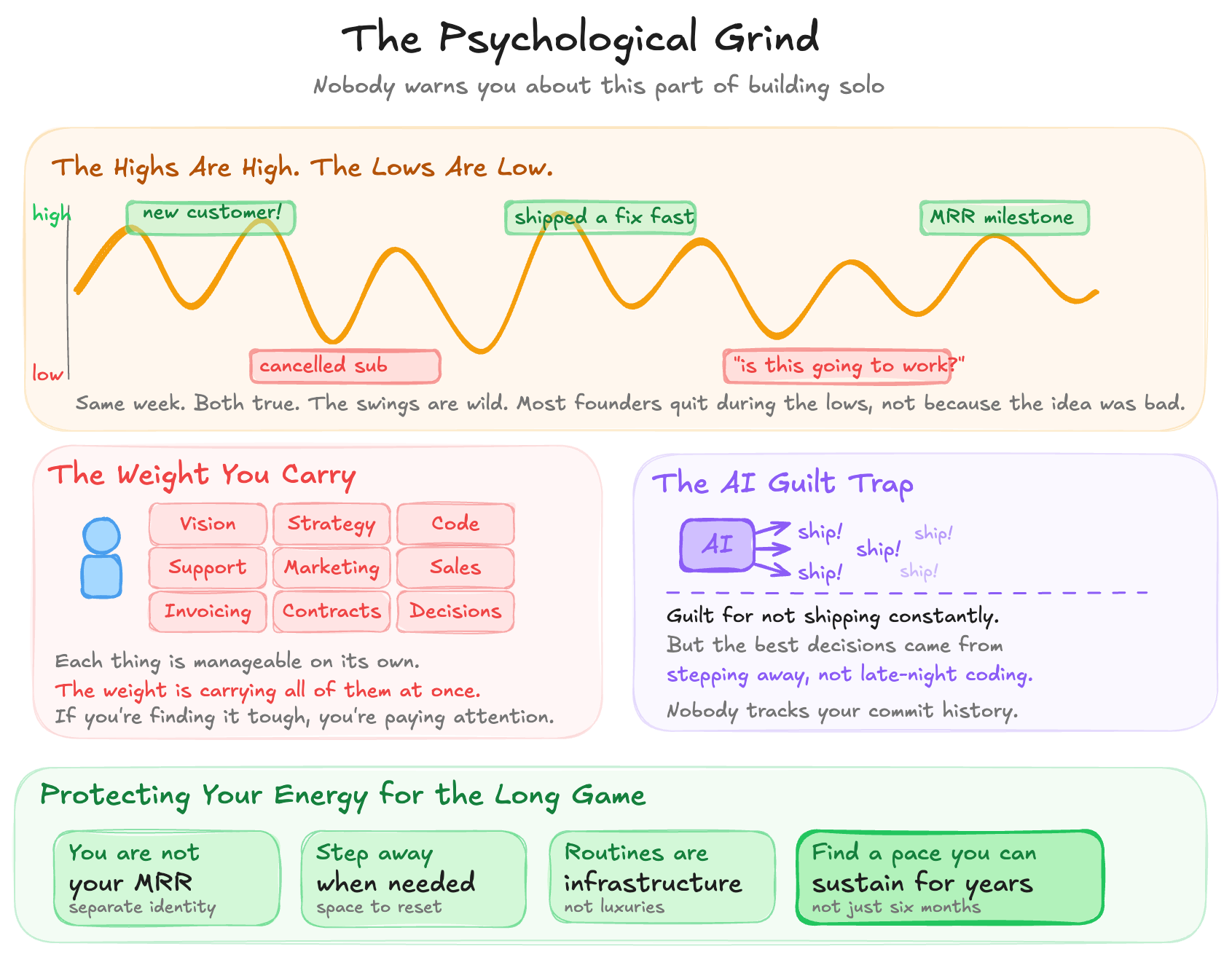
What nobody tells you about the psychological grind of bootstrapping alone, and how to stay in the game.
Why Being a One Person Company Is Actually a Superpower
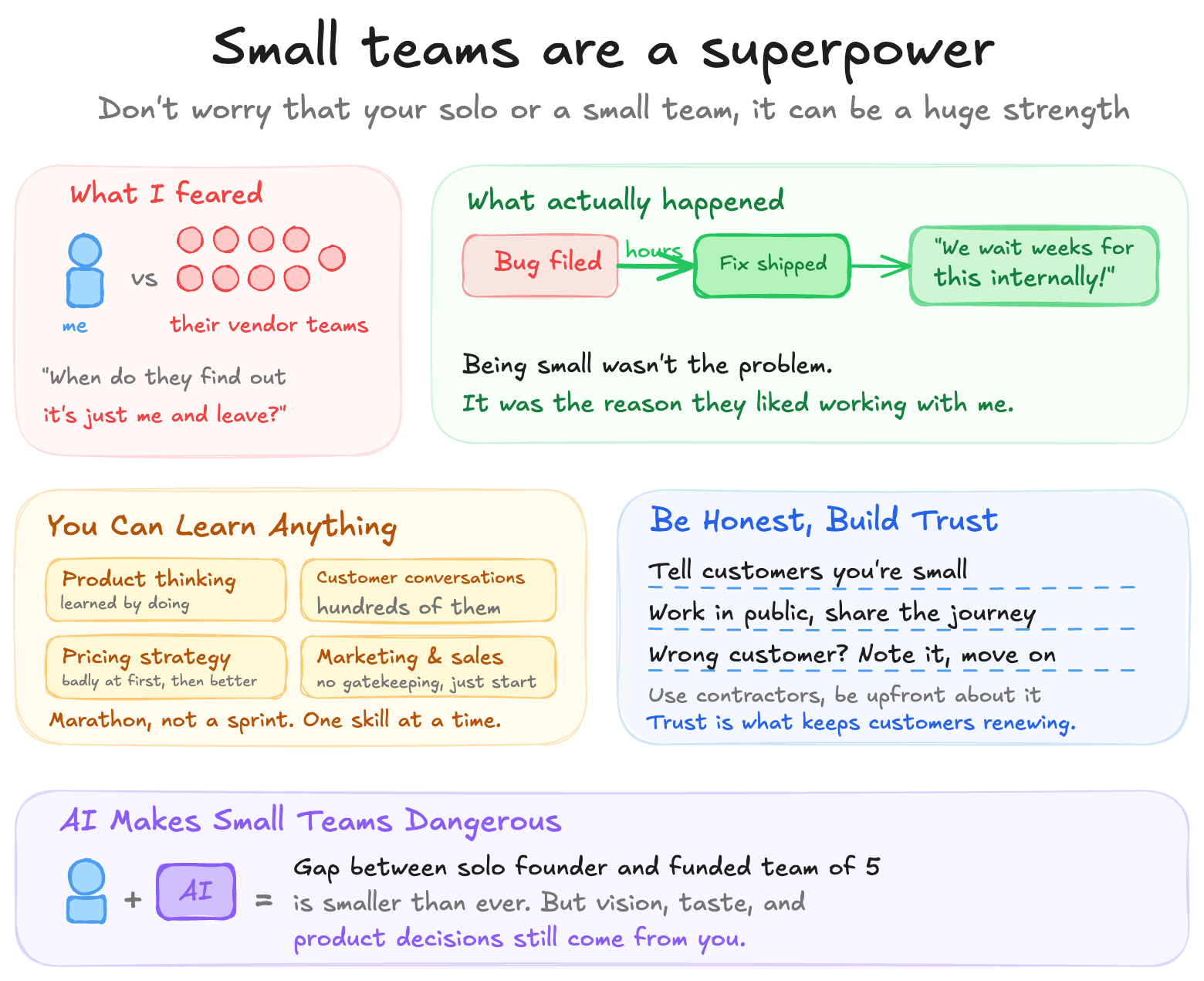
Being small feels like a weakness until you realize it's the thing your customers actually value.
Why I Chose to Bootstrap EventCatalog and What It Taught Me About Defining Success on Your Own Terms
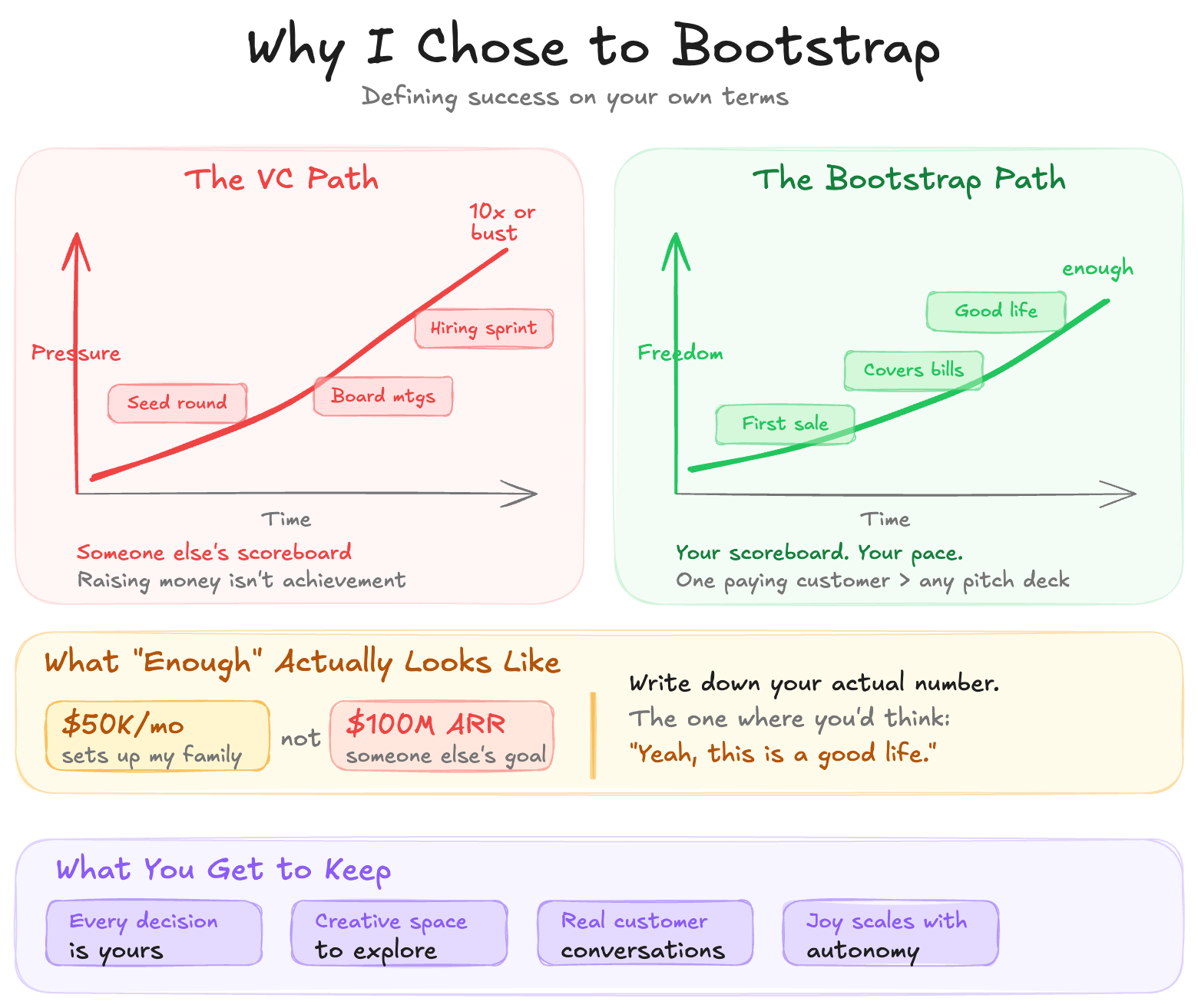
What changes when you stop chasing VC milestones and start building for the life you actually want.
Why I Treat AI as a Teammate Not a Strategy
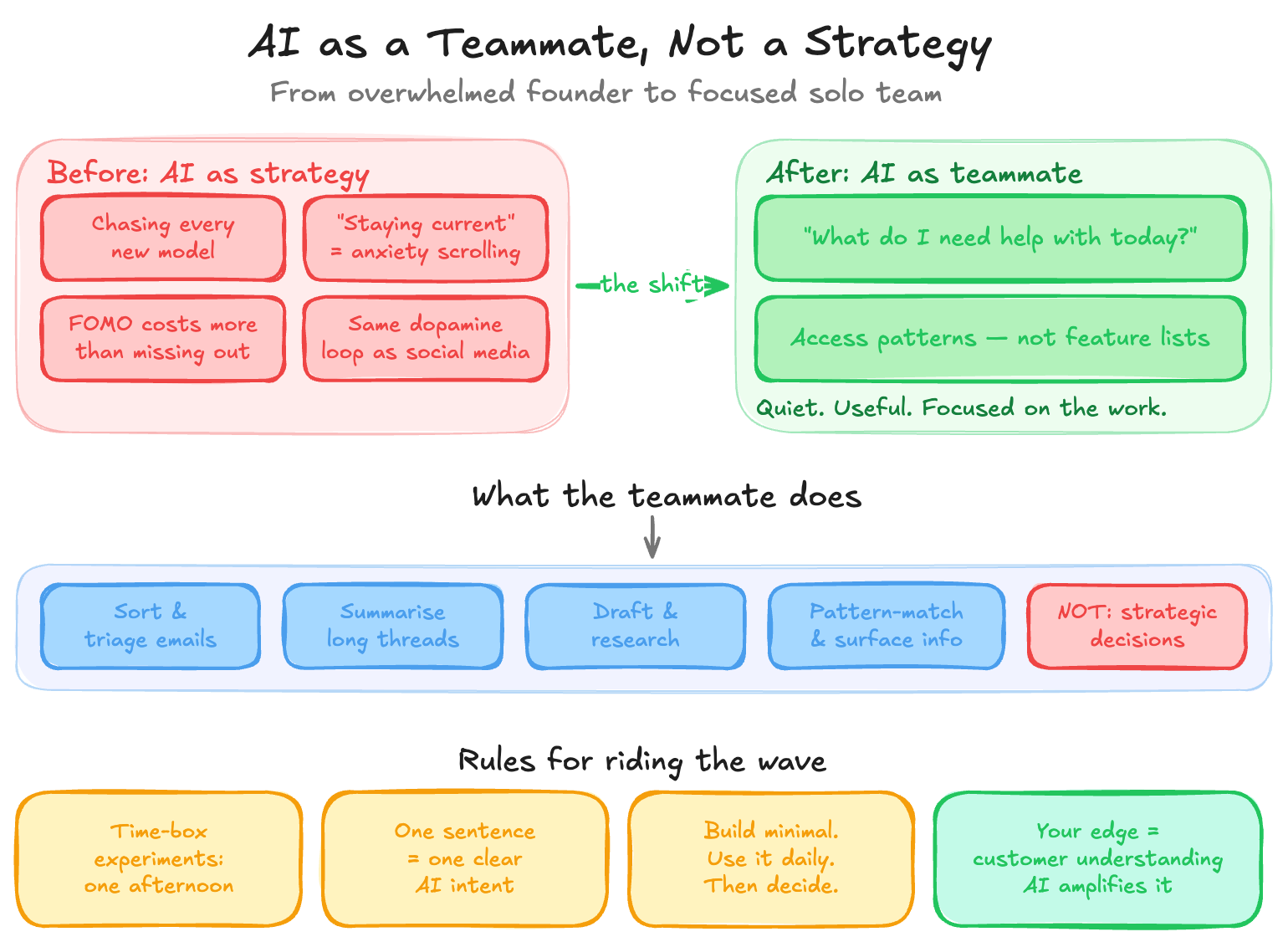
AI was derailing my focus until I stopped chasing trends and started treating it like a teammate on my solo team.
New visual every week
Short visual breakdowns on pricing, growth, and the realities of bootstrapping. Delivered to your inbox. No fluff.