Why I Quit My Job to Build EventCatalog and What I Learned About Taking the Leap
What it really looks like to leave your job and go all-in on an open source project.
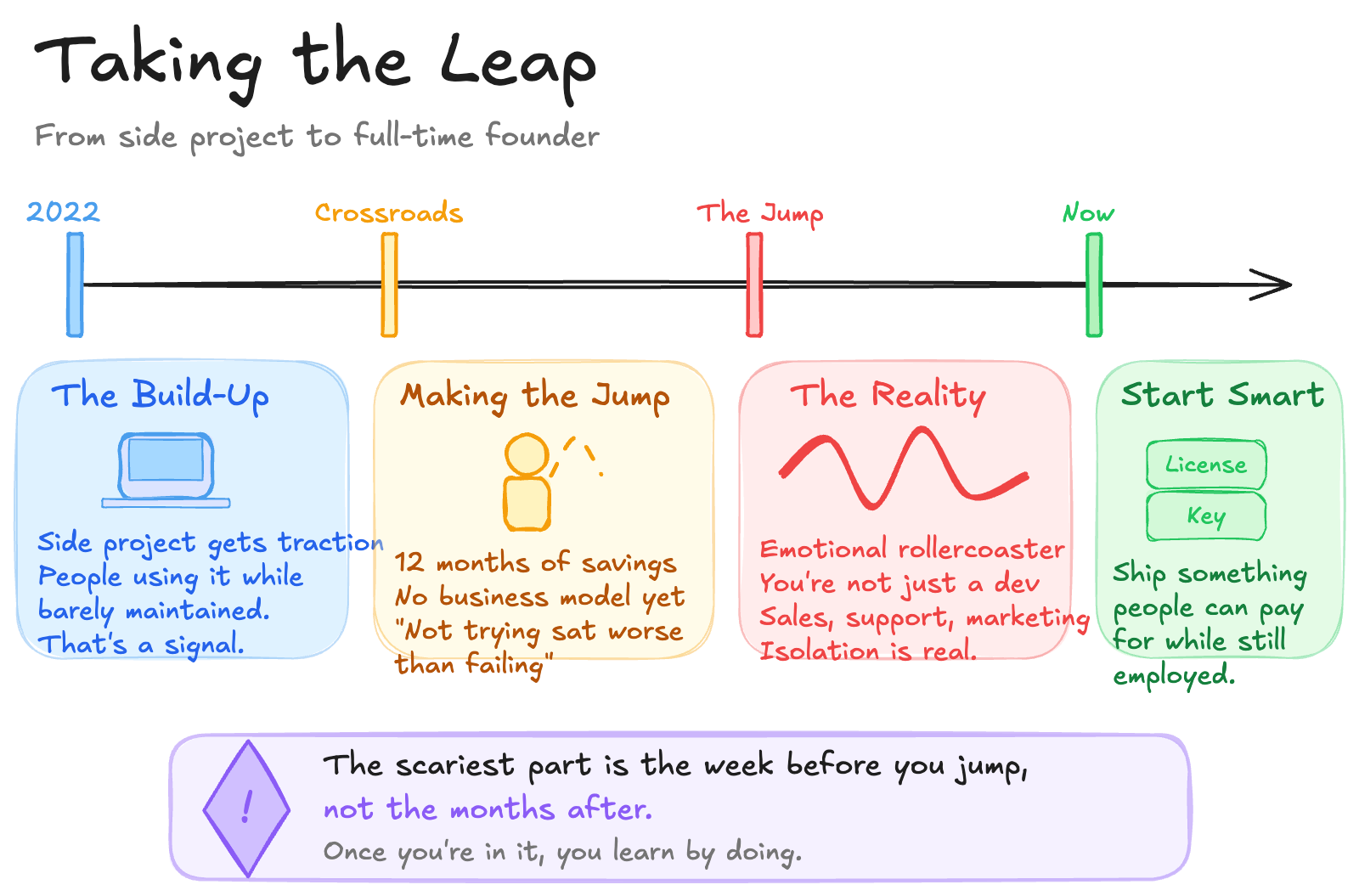
I started EventCatalog as a side project in January 2022. For a couple of years I built it alongside a full-time developer job. I’d go to conferences and people would tell me they were using it, which was wild because I was barely maintaining the thing.
Then circumstances changed and I found myself at a crossroads. I remember sitting there thinking, “Could I actually do this full-time? Could I make open source sustainable?” I had no business model. I had about a year of savings. And honestly, I had no idea if anyone would ever pay for what I was building.
But the thought of not trying sat worse with me than the thought of failing. So I jumped. Looking back, there are things I’d do differently and things I got right by accident. Here’s what I’ve learned so far.
The Build-Up
- Pay attention to the signals while you still have a salary. If people are using your project and you’re barely maintaining it, that’s worth noticing. Don’t dismiss slow traction just because it’s not dramatic.
- Think about where your best creative energy goes each week. If your side project gets the scraps after your day job drains you, you’re probably underestimating what it could become with full attention.
- Start tracking who’s using your thing and why. Talk to them. Ask what problems it solves. This is market research you can do for free while employed.
- Don’t wait for a lightning bolt moment. For most of us the pull towards going full-time is gradual. If the idea keeps coming back, that’s the signal.
- Something to consider: traction without attention is not a business. It’s a hint. Treat it like a hypothesis you need to test, not a guarantee.
Making the Jump
- Figure out if people will pay before you quit. I jumped without a business model and I wouldn’t recommend it. Even a small experiment (pre-sales, a waitlist, one paying user) gives you something real to build on.
- Save aggressively. I had about a year of runway and that gave me breathing room. 12 months minimum if you can manage it. You’ll make worse decisions under financial pressure.
- Reframe the risk for yourself. My thinking was simple: if it doesn’t work, I can go get a job. That framing took the existential weight off it. You’re not burning your career. You’re taking a detour.
- Think about what you’d regret more. Not trying would have eaten at me. If the answer is the same for you, that tells you something.
- Be honest about the financial stress. Running on savings with zero income for months can push you into bad decisions. Desperation is not a business strategy. Plan around it.
The Reality on the Other Side
- Expect the emotional rollercoaster and build habits to manage it. Highs and lows come fast. Journal, exercise, talk to other founders. Don’t let a bad Tuesday become a bad quarter.
- Accept that you’re not just a developer anymore. Sales, support, marketing, community… you’re doing all of it. Block time for non-code work from day one or it will eat your coding hours.
- Think about who you can lean on. The isolation catches people off guard. Find a community, a co-working space, a founder friend you can message when things feel hard.
- Let the ethos carry you through the slow months. I believe in building in public and earning developer trust through transparency. That belief kept me going when revenue was nowhere in sight. Know your “why” before you need it.
- Something people don’t talk about enough: the fear fades faster than you’d expect. The scariest part is the week before you jump, not the months after. Once you’re in it, you start learning by doing.
Start Before You’re Ready (But Start Smart)
- Ship something people can pay for while you still have income. License keys, a paid tier, a support plan. Anything. I sell license keys for EventCatalog. You don’t need a fully-grown SaaS on day one.
- Research open source business models before you commit to one. Open-core, dual licensing, managed services, support contracts. Read what’s working for other maintainers and pick the one that fits your project.
- While you still have a job, build your audience. Write about what you’re learning. Share your progress. Every person who follows your journey now is a potential customer later.
- Think about what “sustainable” means for you specifically. It might not be six figures right away. Covering your expenses while you build something you’re proud of is a perfectly valid first milestone.
- The best way to learn this stuff is to dive in. Books and blog posts can only take you so far… the real learning happens when it’s your money, your time, and your project on the line.
New visual every week
Short visual breakdowns on pricing, growth, and the realities of bootstrapping. Delivered to your inbox. No fluff.