Why I Chose to Bootstrap EventCatalog and What It Taught Me About Defining Success on Your Own Terms
What changes when you stop chasing VC milestones and start building for the life you actually want.
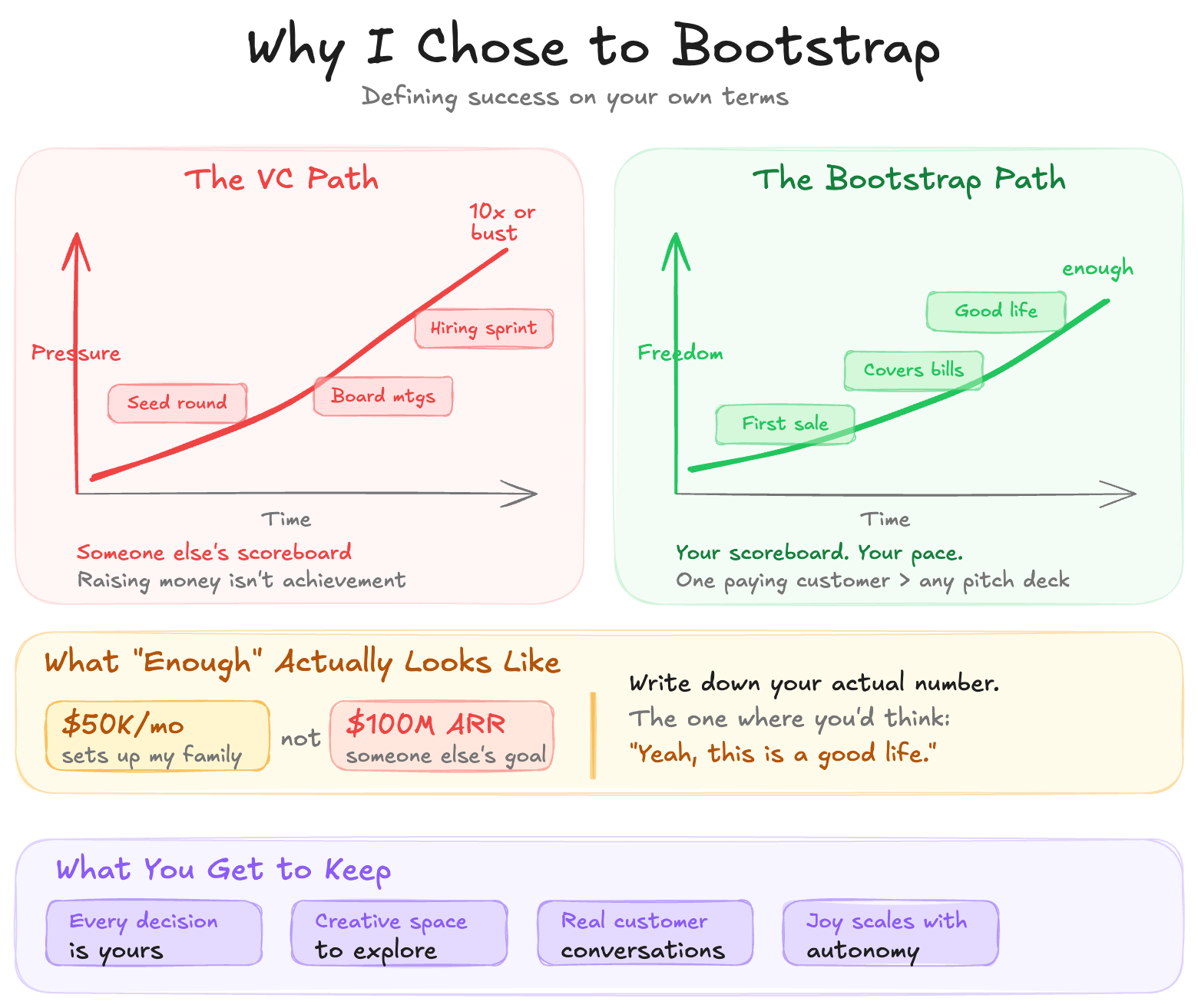
I’ve worked inside VC-backed startups. I’ve seen the decks, the board meetings, the constant pressure to hit growth targets that feel disconnected from the actual product. It’s exciting in its own way, but something about it never sat right with me. The runway conversations, the hiring sprints, the seed rounds… it always felt like the business was being built for someone else.
When I started EventCatalog, I kept looking at other bootstrappers and thinking, “That’s the life I want.” Not the grind-until-exit story. The one where you build something you believe in, earn enough to live well, and actually enjoy the process. No board to report to, no external pressure pushing you to grow 200% year over year. Just you, the product, and the people who use it.
So I chose to bootstrap. And it’s taught me more about what success actually means than any startup I’ve worked at. Here’s what I’ve learned along the way.
The VC Playbook (and Why It Didn’t Fit)
- VC-backed companies optimise for scale, not satisfaction. The whole system is designed around 10x returns. That’s not inherently bad, but it shapes every decision in ways you might not want.
- Think about what happens when someone else controls the narrative. Your open source project stops being about the problem it solves and starts being about the revenue it generates. That shift changes everything about how you build.
- The runway clock creates a different kind of stress. When you’re burning investor money, every month that doesn’t show massive growth feels like failure. As a bootstrapper, a slow month is just a slow month.
- Something to consider: raising money is often treated as a milestone. People congratulate you. It feels like progress. But raising money isn’t achievement. It’s debt with expectations attached. The real milestone is building something people pay for.
- I’ve seen talented founders lose their passion because investors pushed the product in directions that didn’t make sense for users. Protecting your vision is worth more than accelerating your growth.
What “Enough” Actually Looks Like
- $1M ARR as a bootstrapper is a completely different story to $1M ARR as a VC-backed company. For them, it’s peanuts. For you, it’s life-changing money landing in your account every month.
- Ask yourself honestly: how much do you actually need? For me, even $50K a month sets up my family. You don’t need to build a unicorn to build generational wealth on your own terms.
- Think about what success looks like without anyone else’s scoreboard. If covering your expenses, doing work you love, and having time for your family counts as winning… that’s perfectly fine. More than fine.
- The bootstrap narrative gets lost in all the fundraising noise. There’s a whole path where “enough” is the goal, not “everything.” I wish more people talked about it.
- Something worth exploring: sit down and write out your actual number. Not the impressive number. The number where you’d wake up and think, “Yeah, this is a good life.” That’s your real target. It might surprise you how achievable it is.
The Stuff You Get to Keep
- Every decision is yours. The product direction, the pace, the experiments. Nobody is telling you what to prioritise based on a growth model they built in a spreadsheet.
- Think about what your best creative work looks like. For me, it happens when I have space to explore and experiment without pressure. Bootstrapping gives you that space. VC timelines take it away.
- The stress is still real, but it’s your stress. When I face into a hard problem, I know the effort comes back to me. That’s a different feeling to grinding for someone else’s returns.
- I get to talk to customers because I want to understand their problems, not because I need to hit a quarterly target. That changes the quality of every conversation.
- Something people underestimate: the joy of building doesn’t scale with revenue. It scales with autonomy. Protect the thing that makes you love the work and the rest tends to follow.
Before You Raise, Ask Yourself This
- What’s your actual end goal? If you want a 30x exit and a massive team, VC might be the right path. But if you want to build something sustainable doing work you love, bootstrapping is worth a serious look.
- Think about the life you want, not just the company. A VC-backed founder and a bootstrapped founder can earn the same money but live completely different lives. Which one do you actually want?
- Start by shipping something people can pay for while you still have a salary. You don’t need funding to validate demand. One paying customer tells you more than any investor pitch ever will.
- Question the assumption that you need money to start. Most of us don’t. We need time, focus, and a problem worth solving. Funding solves a scaling problem, not a starting problem.
- Here’s what I’d tell any developer with a side project: the bootstrapping path is quieter. Nobody writes TechCrunch articles about your seed round. But the trade-off is that you get to keep the thing you built, build it the way you want, and define what winning looks like for yourself. That’s worth more than most people realise.
Related Visuals
Why I Quit My Job to Build EventCatalog and What I Learned About Taking the Leap
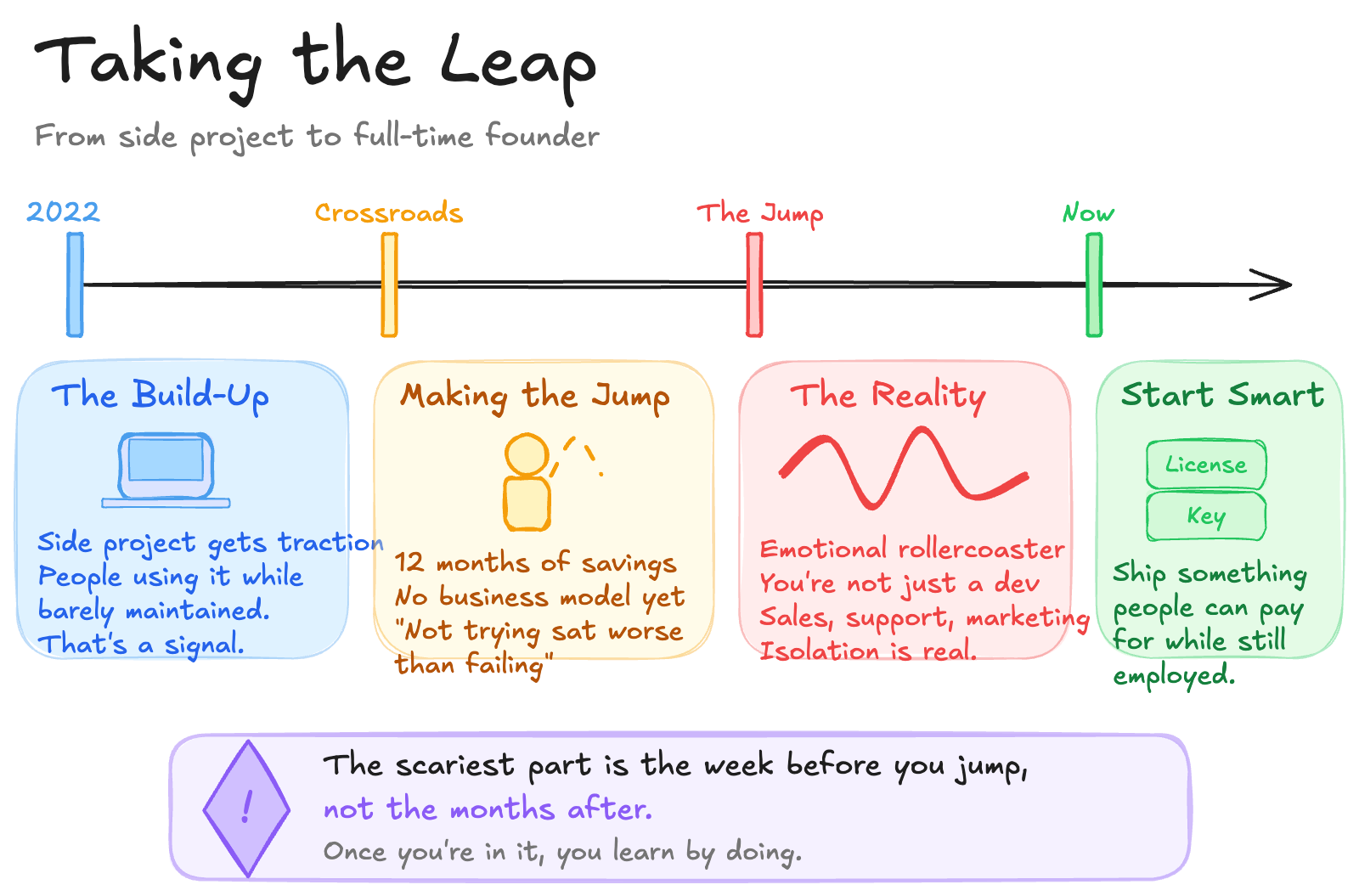
What it really looks like to leave your job and go all-in on an open source project.
My First Sale and What I Learned About Turning Free Users Into Paying Customers
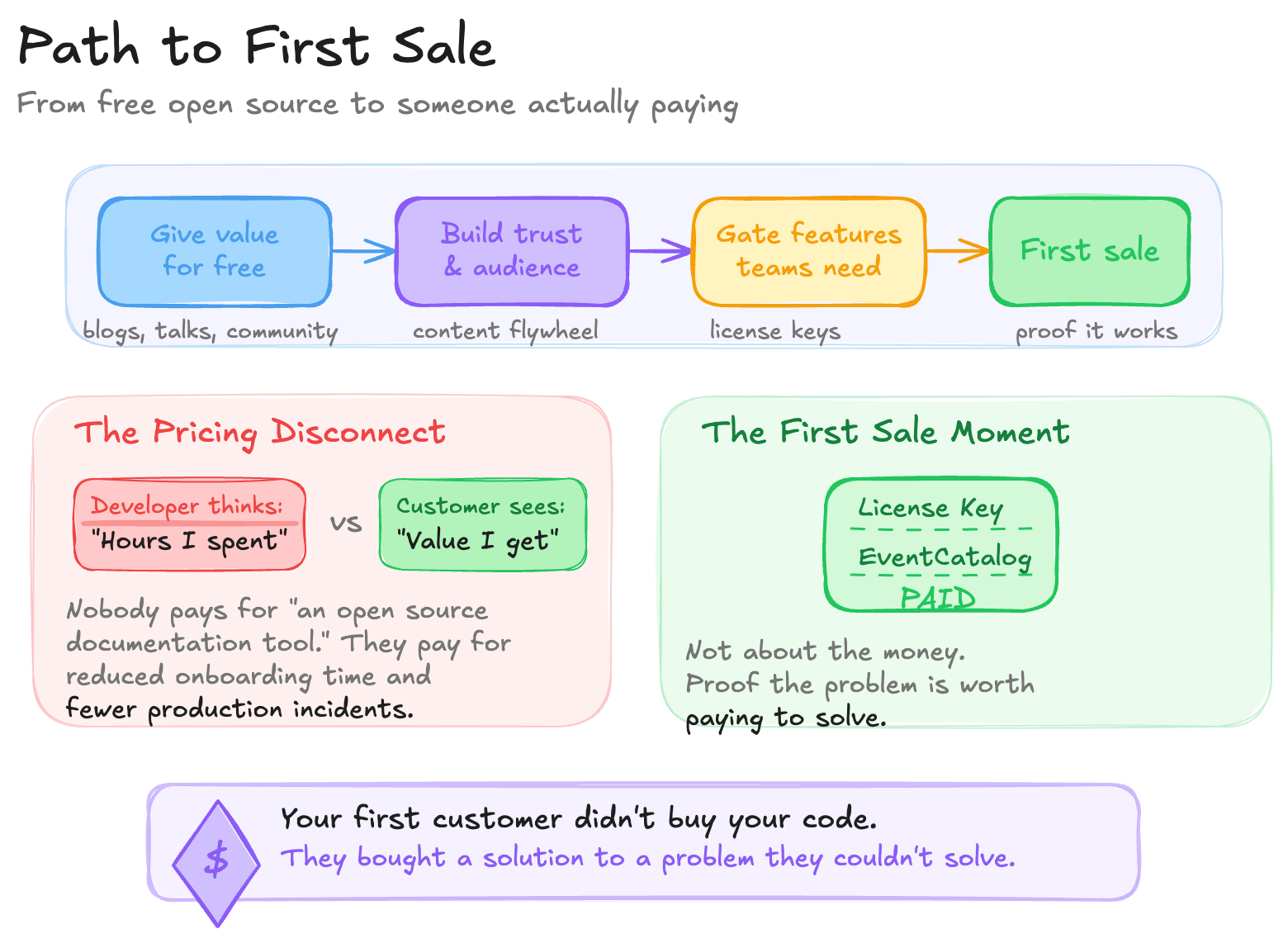
How I went from free open source project to someone actually paying me for it.
New visual every week
Short visual breakdowns on pricing, growth, and the realities of bootstrapping. Delivered to your inbox. No fluff.