How I Turned Content Into a Growth Engine and Why It Works Better Than Ads
Why developer advocacy and problem-space thinking created a compounding growth flywheel for me
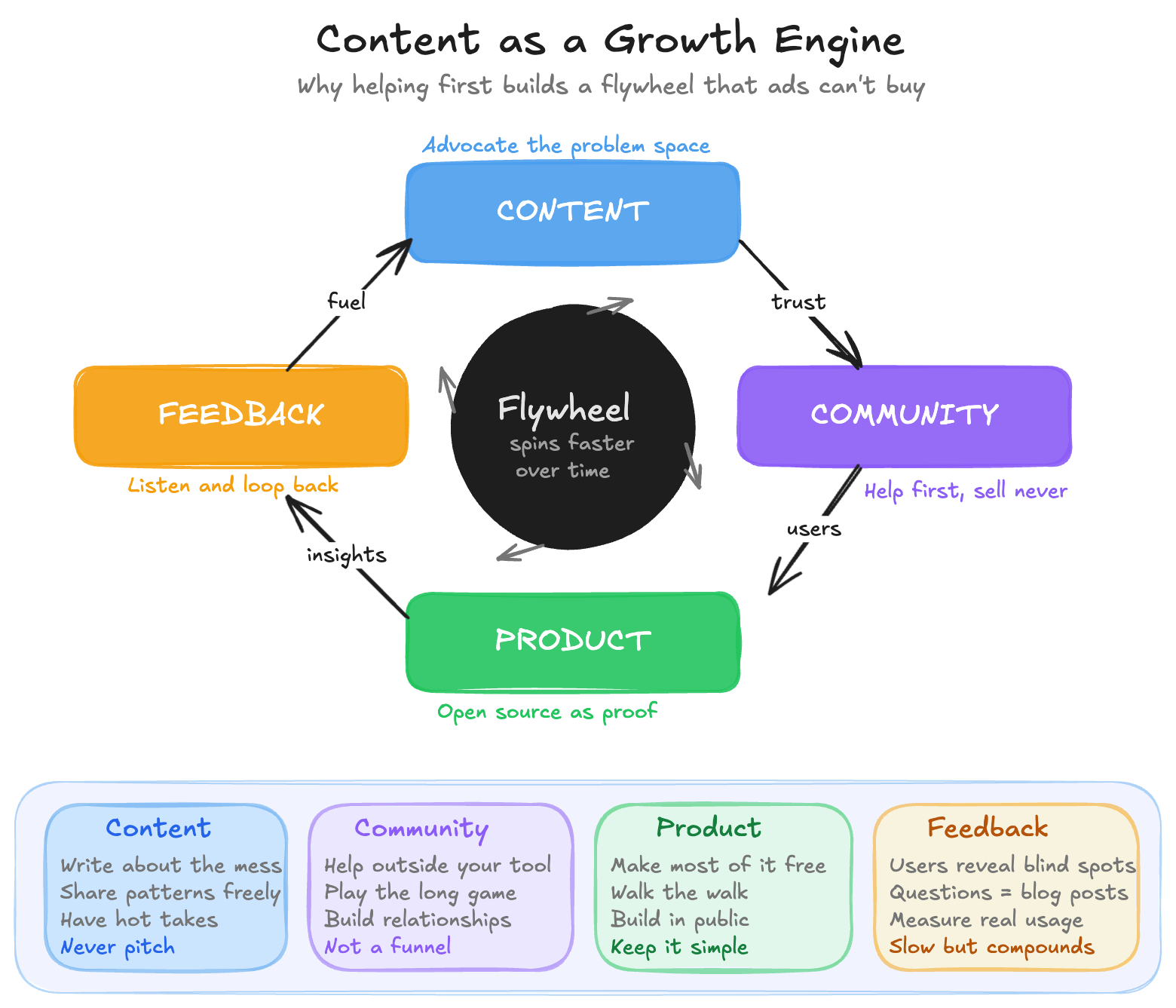
I spent years advocating for event-driven architectures before EventCatalog existed. I wrote about the mess, the complexity, the patterns that work and the ones that don’t. I wasn’t selling anything. I was just helping people navigate the same problems I’d faced.
When I started building EventCatalog, something clicked. People came to the project because they already knew me from the problem space. They trusted me because I’d helped them before, not because I pitched them a product. I realized then that content isn’t just marketing. It’s part of the product itself.
Here’s what I’ve learned about how this flywheel works and why it matters more than you think.
Content: Advocate the Problem Space
- Write about the mess, not your solution. Event-driven architectures are complex. Documentation is a pain. That’s what I write about. Not “here’s why EventCatalog is great” but “here’s why this whole space is hard and what I’ve seen work.”
- Think about what would be useful to someone who never uses your product. That’s the content worth creating.
- Share patterns and anti-patterns from the domain. Teach concepts that apply beyond your tool. This builds trust because you’re helping first, selling never.
- Engineers can smell a product pitch from a mile away. Be authentic about the problem space and they’ll respect you for it.
- Your hot takes matter. Have an opinion. Say what you believe. “I think X is a mess” resonates more than “here are some considerations.”
Community: Help First, Sell Never
- Answer questions even when people aren’t using your product. I spend time on forums, Discord servers, helping people solve problems that have nothing to do with EventCatalog. That compounds.
- Think about the long game. Someone you help today might not use your tool for two years. But when they do need it, or when they change companies, they remember.
- Engage authentically. Don’t drop product links. Don’t redirect every conversation to your solution. Just be helpful. The ROI is invisible at first but it’s real.
- Engineers are your ideal customer profile and they’re very sensitive to sales tactics. Authenticity wins over conversion optimization every time.
- Build relationships, not a funnel. The people in your community become your feedback loop, your advocates, your next hires. This is worth more than any growth hack.
Product: Open Source as Proof
- Make most of it free. Open source is how you prove you’re serious about helping, not just extracting value. People can see your code, your roadmap, your priorities.
- Think of paid features as sustainability, not the goal. The core value needs to be accessible or the flywheel doesn’t spin.
- Your product backs up what you teach. If you write about documentation being hard, your tool better make documentation easier. Walk the walk.
- Building in public compounds trust. People see you iterating, taking feedback, making mistakes. That’s powerful.
- Don’t over-index on features. Most developers would rather use something simple that solves the core problem than a feature-bloated tool that tries to do everything.
Feedback: Listen and Loop Back
- Users give you problem insights you’d never find alone. Every conversation reveals gaps in your thinking, edge cases you didn’t consider, pain points you forgot existed.
- Think about feedback as fuel for your next content. Someone asks a question? That’s your next blog post. Multiple people hit the same wall? That’s a talk.
- This is where the flywheel compounds. Content brings people in. People give you feedback. Feedback shapes your product and your content. Better content brings more people. It’s slow but it works.
- Measure what matters. Not just downloads or stars. Are people actually using it? Are they coming back? Are they recommending it?
- The cycle takes time. I’m still figuring this out. But I know it works because I’ve seen it. Content from two years ago still brings people in. Conversations from last month shape what I’m building today.
Related Visuals
My First Sale and What I Learned About Turning Free Users Into Paying Customers
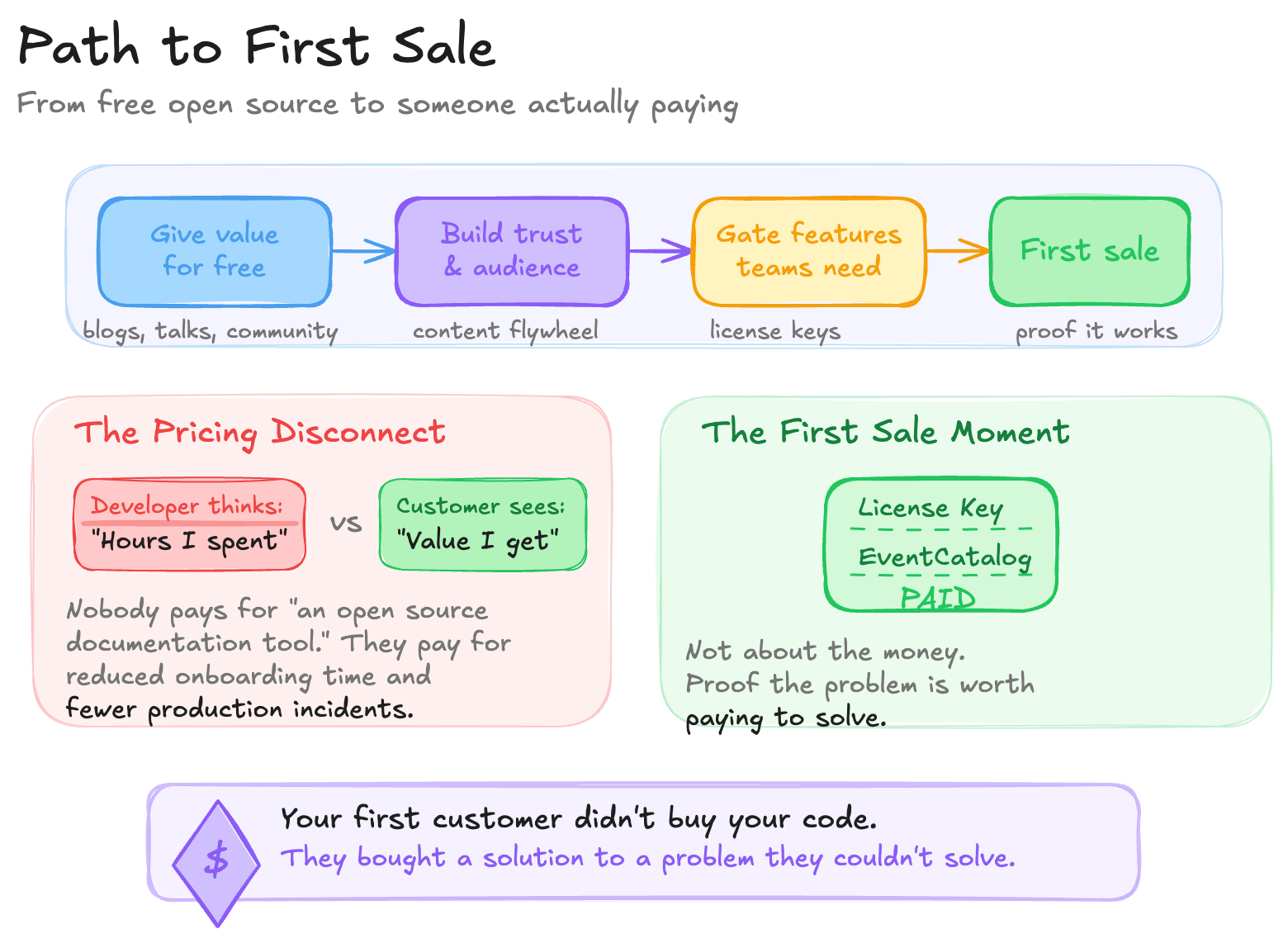
How I went from free open source project to someone actually paying me for it.
Why I Quit My Job to Build EventCatalog and What I Learned About Taking the Leap
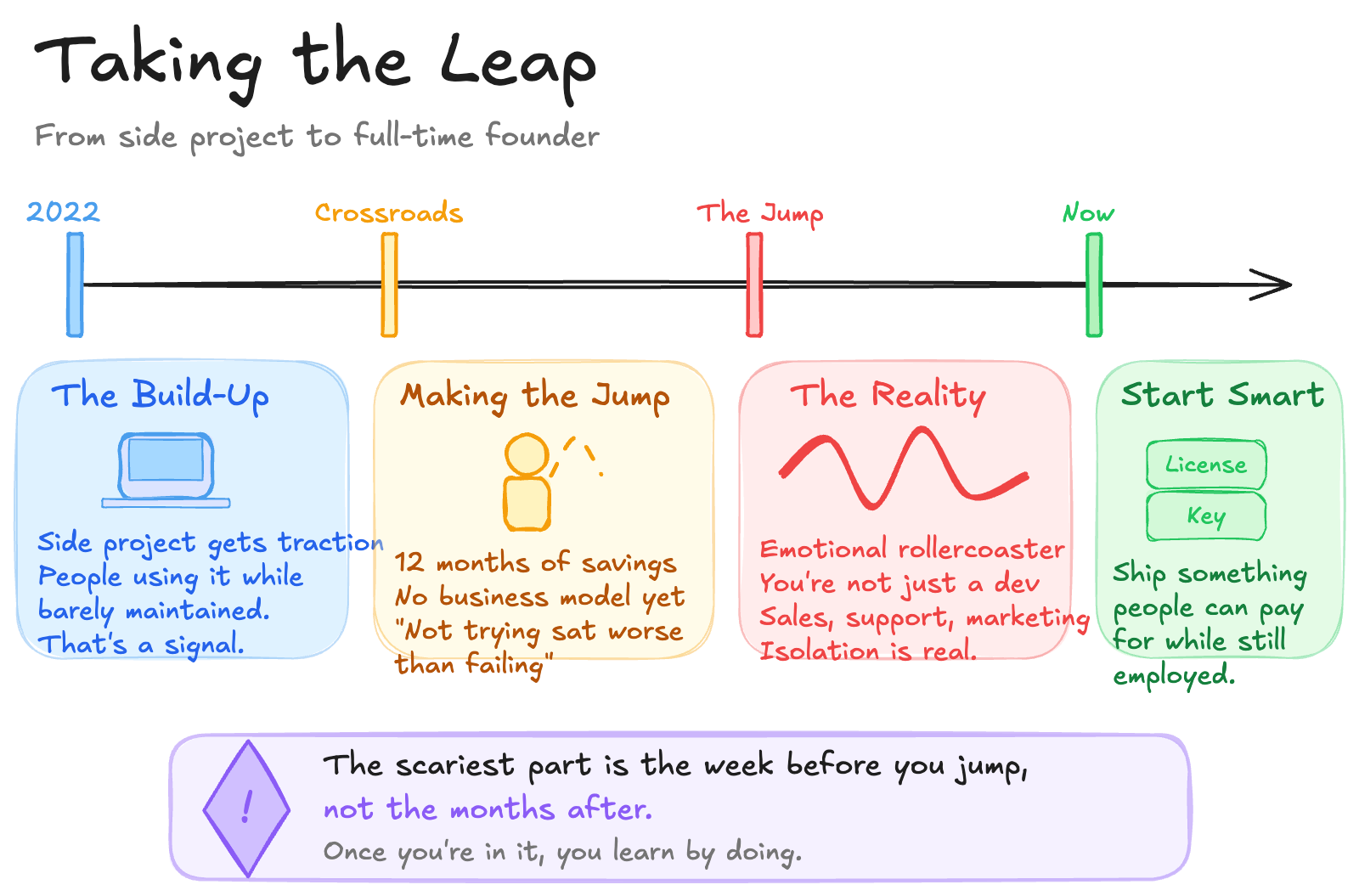
What it really looks like to leave your job and go all-in on an open source project.
New visual every week
Short visual breakdowns on pricing, growth, and the realities of bootstrapping. Delivered to your inbox. No fluff.